
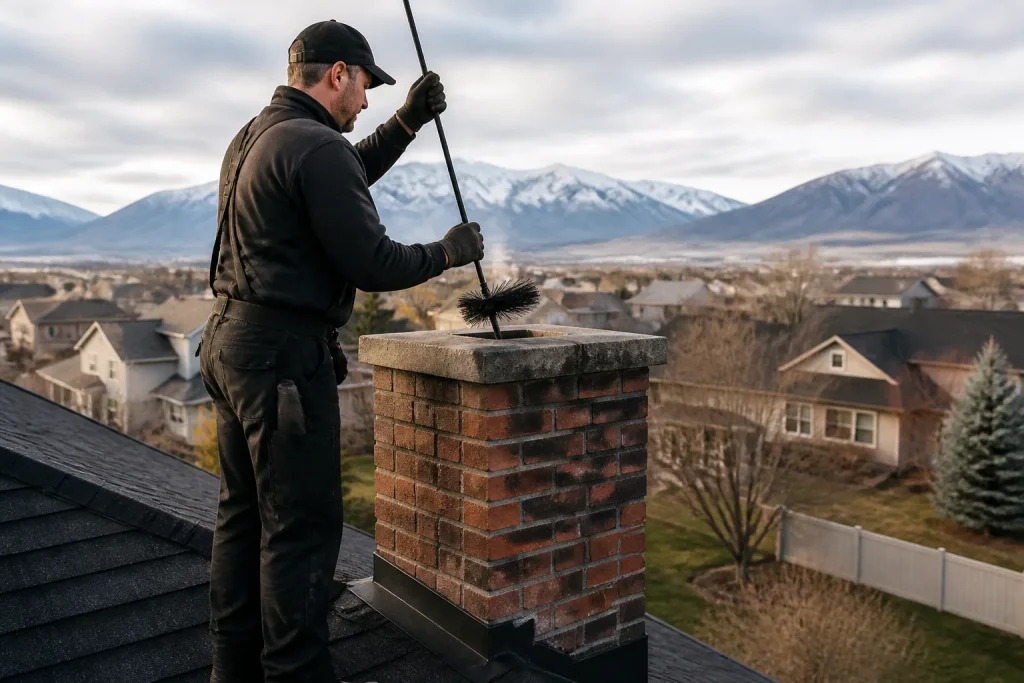
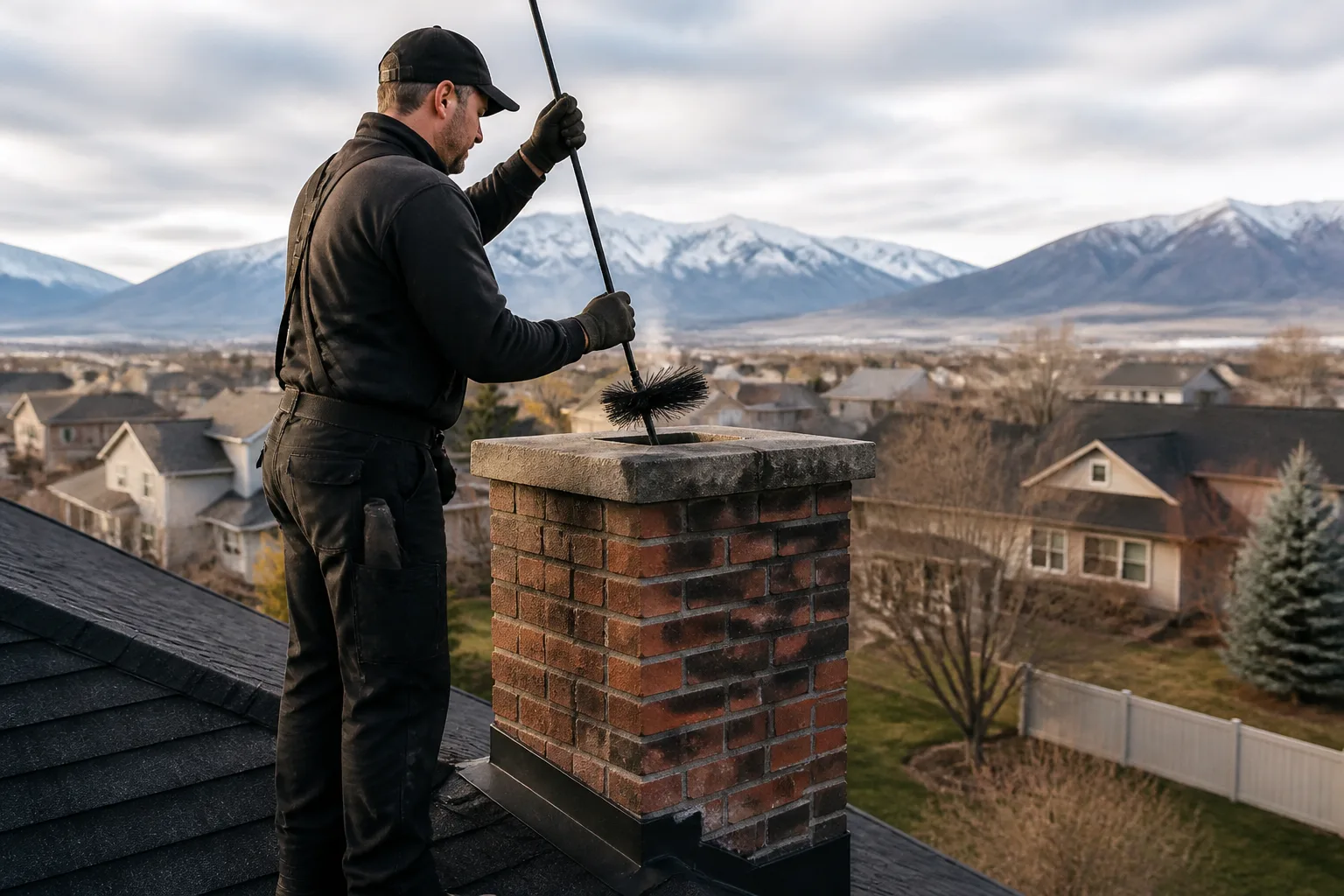
Emergency Chimney Sweep Near Me: What Riverton Homeowners Should Do First
A chimney fire can burn hot enough to crack a flue tile in a matter of minutes, and the sweep is the last thing you should be reaching for. The first move is on the chimney itself: stop feeding the fire, cut the air supply if you can do it safely, get everyone out, and call 911 if flames or heavy smoke are coming from the top. Once the house is safe, then you call for help. If you’d rather have a pro on the line while you work through it, call (833) 468-5704.
What Counts as an Actual Chimney Emergency in Riverton?
Not every chimney problem is a tonight problem. In our experience, homeowners in Riverton tend to treat a smoky fireplace, a strange smell, and a full-blown chimney fire as the same event. They aren’t, and the response is different for each. Sorting your situation into the right category is the single most useful thing you can do in the first few minutes.
Call 911 immediately if:
- You hear a low roaring sound like a freight train from the flue.
- Flames or sparks are visible at the top of the chimney.
- There’s dense smoke in the room, or the walls or chimney chase feel hot to the touch.
- Your carbon monoxide alarm is sounding. Get everyone outside and call from there.
Urgent but not dangerous tonight:
- A strong smoke smell that lingers after the fire is out.
- Poor draft that pushes smoke back into the room.
- Visible creosote buildup or a blockage you can see from the firebox.
- A damaged cap or crown letting water in.
Anything in the first group is a fire department matter first, a sweep matter second. Anything in the second group can usually be booked into the next opening and handled before the next burn.
Step-by-Step: Your First Response, by Situation
The right first action depends entirely on what’s actually happening. Here’s how we walk Riverton homeowners through it, in order.
If it’s an active chimney fire
- 1
Get everyone out of the house, including pets. Call 911 from outside.
- 2
Close the glass doors or firebox door if you can reach them safely on the way out. Starving the fire of air helps, but never stay inside to do it.
- 3
Don’t throw water on a hot firebox or flue. Thermal shock can crack masonry or a flue tile that’s still intact.
- 4
Once the fire department clears the house, don’t light another fire until a Level 2 inspection has been done. A fire that burned in the flue can leave damage you can’t see from the firebox.
If it’s heavy smoke backing into the room
- Open a nearby window to establish a draft, and crack the firebox door slightly.
- Check that the damper is fully open. A partially closed damper is the most common cause of smoke rollback we see.
- If smoke still rolls in, put the fire out and stop using the fireplace until it’s inspected. Continued use with poor draft can push carbon monoxide into the living space.
If it’s a sudden blockage
- Stop using the fireplace immediately.
- Look up the flue with a flashlight from the firebox. A bird nest, a fallen cap, or a chunk of spalled masonry can all block the flue.
- Don’t try to pull a blockage down from the roof yourself. It’s a fall hazard, and it can dump soot and debris into the room.
- Book a sweep. Blockages are cleaned, then checked with a camera to make sure nothing else is loose above the blockage point.
If you’re not sure which situation you’re in, that’s fine. Call (833) 468-5704, describe what you’re hearing, seeing, and smelling, and we’ll tell you which of the three you’re dealing with.
How Do You Safely Shut Down a Chimney Fire Before Help Arrives?
You can’t put out a chimney fire from inside the house. What you can do is limit the fuel and the air while you get out, and that’s the extent of what’s safe for a homeowner to attempt. The fire department handles the rest. We’ve seen this mistake more than once: people try to fight a chimney fire with a garden hose from the roof or a bucket from the firebox, and both are genuinely dangerous.
What’s safe to do:
- Close the firebox door or glass doors as you leave, so the fire has less air to pull.
- Make sure the damper is open, not closed, on the way out. A closed damper can force smoke and heat into the house.
- Shut off the gas supply at the meter if you have a gas appliance connected to the same chimney, and call the utility from outside.
- Keep everyone out of the house until the fire department says it’s clear.
What’s not safe: water on a hot flue, going onto the roof, or trying to close a damper that’s too hot to touch. The house is replaceable. You aren’t.
What Should You Tell the Chimney Sweep When You Call?
The more precisely you describe what’s happening, the better the right tools and the right technician show up on the first visit. In our experience, the calls that go best are the ones where the homeowner gives us four specific things:
- What you saw: flames at the top, sparks, smoke in the room, a strange smell, or nothing visible but a CO alarm.
- What you heard: roaring, crackling, or nothing at all. A roaring sound is a strong signal of a chimney fire.
- What the fire was doing: wood, gas, or pellet, and how long it had been burning before things went wrong.
- What the chimney looks like from outside: cap condition, crown condition, visible staining, or a missing cap.
Mention whether anyone has been lightheaded, nauseous, or had headaches in the house. Those are the symptoms of carbon monoxide exposure that people usually dismiss, and they change the urgency of the call.
Once the situation is contained, we get a camera up the flue and document what we find. Nothing gets recommended without a photo you can look at yourself. That’s the difference between a real answer and a sales pitch.
Related services in Riverton: a documented chimney inspection is the starting point for anything that happened tonight.
What Comes After the Emergency?
A Level 2 inspection is mandatory after any chimney fire or suspected chimney fire, full stop. It’s the only way to know whether creosote ignited inside the flue, whether a flue tile cracked from the heat, or whether the fire breached a joint in an older masonry chimney.
Here’s what a Level 2 inspection covers:
- A full visual inspection of the firebox, damper, smoke chamber, and flue.
- Camera inspection of the entire flue length from top to bottom.
- Inspection of the chimney exterior, cap, crown, flashing, and chase.
- A written photo report you keep on file.
What we find varies. Sometimes it’s a flue that’s intact and just needs a heavy sweep. Sometimes a single tile is cracked and can be restored with HeatShield ceramic resurfacing instead of a full reline. Sometimes the flue is compromised enough that a DuraFlex liner is the honest answer. And sometimes a missing or damaged cap let water in long before tonight, and that’s the real reason the flue was weak. We size and fit Gelco and Olympia Chimney caps during the same visit rather than sending you off to find one yourself.
If you also have damage inside the firebox from the fire, fireplace repair is the next step, and it’s within the same scope of work.
When to Call a Pro (and When You Can Wait)
Call us right away if: a chimney fire has happened, a CO alarm has gone off, smoke is backing into the room even after you open the damper, or a blockage is visible and you can’t clear it.
You can wait a week or two for: a smoky smell after the fire dies down, a cap that’s come loose, visible creosote buildup, or a small crack in the mortar crown. None of those are tonight problems, and rushing the job isn’t safer than scheduling it properly.
What we won’t do is tell you that you need thousands of dollars of masonry work you have no way to verify. If your flue isn’t ready, we’ll show you the photos and say so. And if the honest answer is that a full reline can wait until spring, we’ll tell you that too.
For emergencies and for planned work alike, a chimney repair assessment sits inside the same visit as the sweep, so the right fix is decided from evidence, not a guess.
Key Takeaways
- A chimney fire is a 911 call first, then a sweep call.
- Close the firebox door, leave the damper open, get everyone out.
- Never put water on a hot flue or go up on the roof.
- Tell the sweep exactly what you saw, heard, and smelled, and whether anyone felt ill.
- A Level 2 inspection is mandatory after any chimney fire, no exceptions.
- Smoke rollback, a loose cap, or visible creosote can usually wait for a scheduled visit.
The Bottom Line
The first few minutes of a chimney emergency are about getting the house safe, not finding a phone number. Once everyone is out and 911 has been called if needed, then it’s a sweep matter, and a Level 2 inspection tells you the truth about what the fire actually did to your flue. If you’re in Riverton and need help, Chimney Sweep Riverton offers free estimates, and our technicians have up to 9 years of experience. Call (833) 468-5704. We answer 24/7, with fast dispatch from 7am to 7pm, Sunday through Friday. If you’d rather start with a routine chimney sweep and annual inspection before the next burn, that works too. Either way, get it looked at before you light another fire.
Frequently Asked Questions
Loud roaring or crackling from the flue, puffs of smoke or flames at the top, and a strong, sudden creosote smell are the classic signs. Some chimney fires burn quietly and you may not notice them at all, which is why a Level 2 inspection is the only way to be sure. Call (833) 468-5704 to book one; free estimates are available.
No, not until a Level 2 inspection has been completed and the flue has been cleared. A fire can crack a flue tile or open a joint in the masonry without any visible sign from the firebox, and lighting another fire on a compromised flue is a serious risk. Call (833) 468-5704 to schedule the inspection.
A fire produces heat, roaring, and often flames or heavy smoke at the top. A blockage produces smoke rolling back into the room and a weak or absent draft, but no heat signature. Both are chimney emergencies, but only a fire requires a 911 call. If you’re not sure which one you have, call (833) 468-5704 and we’ll help you sort it out.
If flames or heavy smoke were involved, don’t wait and don’t use the fireplace. If the issue is smoke smell, a loose cap, or visible creosote, it can usually be scheduled. We answer 24/7, and a call outside dispatch hours is booked into the next opening, Sunday through Friday, 7am to 7pm. Call (833) 468-5704 for an exact quote.
Written by the team at Chimney Sweep Riverton.
Need Chimney Cleaning Help?
Call Chimney Sweep Riverton - the local pro we connect you with is licensed and insured, here with fast help in Riverton.
(833) 468-5704