
Top Signs You Need Chimney Cleaning Service – Don’t Ignore These
A white stain on your exterior chimney brick isn’t cosmetic. It’s the masonry telling you water has already pushed through the surface, and it’s a sign most homeowners leave alone for seasons before anything else goes wrong. The signals that a chimney needs service are rarely the dramatic ones. They’re the quiet ones – a faint smell, a chalky patch, a fire that’s a little harder to start than it used to be. Here’s what we look for, and what each sign actually means.
The short answer: if you’ve burned a full season without a sweep, if you see white staining, rust in the firebox, or a smell that won’t go away between fires, you’re due for service. If you’d rather have trained eyes on it, call (833) 468-5704 and we’ll book a sweep and a documented inspection.
Which Signs Mean “Schedule Soon” and Which Mean “Don’t Light It Tonight”?
Some signs give you weeks. Others mean stop. The line between them matters more than most homeowners realize, and it’s the first thing we sort out on any call.
Schedule soon if you notice:
- A thin glaze or flaky black buildup on the flue walls you can see from the damper
- A faint smoky smell in the room when the fireplace isn’t in use
- Soot falling into the firebox or staining the surround
- White chalky stains on exterior brick (more on this below)
- It’s been a season or more since the last sweep
Stop using the fireplace tonight if you notice:
- Creosote that looks like tar, glassy, or bubbled alongside the flue
- A strong acrid or chemical smell that gets worse when the fire is lit
- Smoke rolling back into the room instead of rising up the flue
- Visible cracks, gaps, or crumbled mortar inside the firebox or flue
- A carbon monoxide alarm going off anywhere in the house
That second list isn’t a schedule-it-for-next-week situation. Glazed creosote is the fuel a chimney fire feeds on, and backdrafting can push combustion gases into the living space. If any of it sounds familiar in your Riverton home, shut the damper, air the room out, and get someone qualified to look at it.
What Do Efflorescence, Spalling, and Firebox Rust Actually Tell You?
These three outward signs are the chimney’s way of telling you the problem is already structural, not just cosmetic. Efflorescence is that chalky white bloom on exterior brick. It forms when moisture moves through the masonry and leaves mineral salts behind as it dries. It means water is getting in from somewhere – a failed cap, a cracked crown, a missing mortar joint – and it’s not a problem you can paint over.
Spalling is the next stage. The brick face starts flaking, peeling, or popping off in sheets. That’s freeze-thaw damage, and it means water has soaked deep enough that the masonry is physically breaking apart. Left alone, spalling brick can weaken the entire chimney stack.
Firebox rust is the interior equivalent. Rust streaks on the firebox walls, damper, or smoke chamber mean moisture is condensing inside the flue, usually because the chimney is undersized, unlined, or missing a proper cap. In a dry climate like ours around Riverton, moisture problems usually trace back to rain and snow getting in from the top, not humidity. A properly fitted cap from a lineup like Famco or Olympia Chimney closes the most common entry point. If we see rust in the firebox on an inspection, we’re checking the cap, the crown, and the flue liner together.
Why a Fireplace That “Seems to Work Fine” Can Still Be a Problem
This is the part that catches homeowners off guard. A chimney can look and behave normally from the living room while creosote builds up in layers on the flue walls where no one can see it.
Chimney professionals grade creosote in three stages:
- Stage 1: Light, flaky soot. Easy to brush off during a routine sweep.
- Stage 2: Crusty, brittle deposits that cling to the flue and need more aggressive tools.
- Stage 3: Glazed, hardened creosote that looks almost like tar. This is the stage that fuels chimney fires, and it’s often invisible from the firebox.
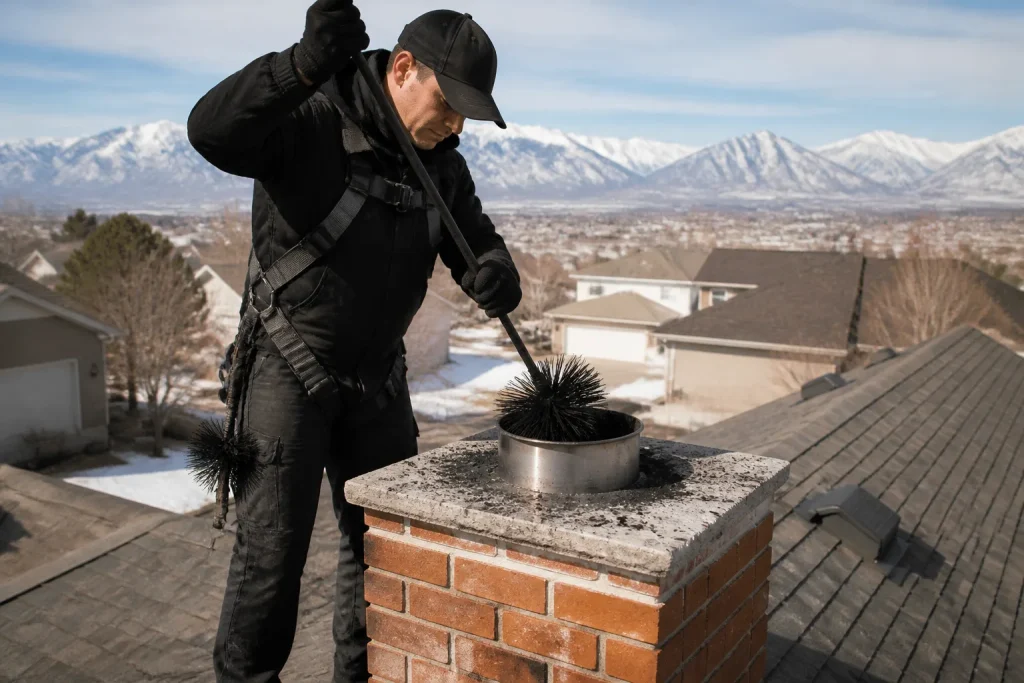
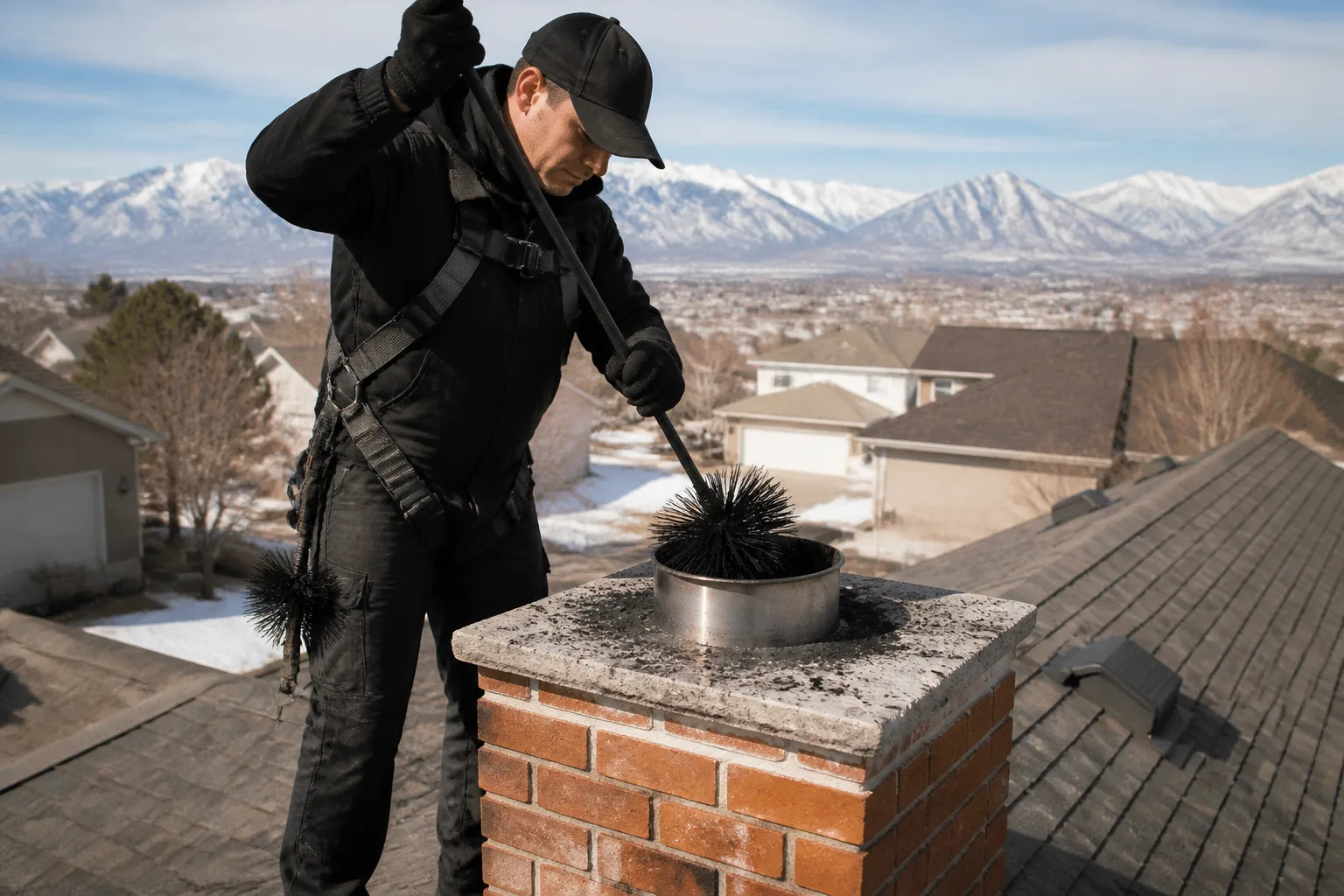
We’ve seen flues at Stage 2 and Stage 3 on fireplaces that lit beautifully every time. Draft pulls fine, smoke goes up, no smells, no alarms. The owner had no idea. That’s exactly why a sweep alone isn’t the whole job. A chimney sweep without an inspection is half a service – we document what we find on camera so you can see the flue condition for yourself, not just take our word for it. In our experience, the Riverton homes that run into trouble are the ones that skipped the inspection because the fire “felt fine.”
Odor Patterns: What Musty, Acrid, and Sulfurous Smells Each Mean
The smell coming off your chimney between fires is one of the most useful diagnostic clues you’ll ever get, and it’s free. Different odors trace to different problems.
- Musty or damp: Moisture. Likely a failing cap, a cracked crown, or water soaking into the masonry. If it’s persistent, get the cap and crown checked before the damage spreads into the flue.
- Acrid or tarlike: Creosote. That sharp, almost chemical smell is concentrated buildup off-gassing in humid or warmer weather. It’s a strong signal that a Stage 2 or Stage 3 sweep is overdue.
- Sulfurous or rotten-egg: This one deserves immediate attention. It can indicate combustion byproducts not venting correctly, and it may overlap with a carbon monoxide concern. Shut the fireplace down and get a professional to inspect before lighting it again.
- Smoky every time you light it: Poor draft. Sometimes a blocked flue or a cap clogged with debris. Sometimes the flue is sized wrong for the firebox. Either way, it needs diagnosing.
Don’t chase odors with air fresheners or candles. The smell is telling you something.
The 30-Second Firebox Check Any Homeowner Can Do
You don’t need tools for this. Once a month during burning season, with the fire cold and the ash settled, open the firebox door and take a slow look around. Thirty seconds is enough to catch the most common early warning signs in your Riverton home.
- Look up at the damper and the first few feet of flue. Black flaky buildup is normal between sweeps. Tar-like glaze or glassy sheeting is not.
- Run your eye along the firebox walls and floor. Cracks, missing mortar joints, or crumbling brick mean the firebox is failing and needs inspection.
- Check for rust streaks or orange staining on the damper, firebox, or smoke shelf. That’s a moisture signal.
- Look at the exterior chimney from the ground. White chalky stains, flaking brick faces, or a cap that’s bent, missing, or rusted through all move you to the “schedule soon” list.
- Sniff the room cold. Any of the three odor patterns above is your answer.
Anything that looks like tar, any crack you can fit a coin into, any visible water staining – those are your “call a pro” moments, not a “wait and see.” Relining with a system like DuraFlex or resurfacing with HeatShield is a real repair path matched to the actual flue condition, and we’ll tell you honestly whether your flue needs either one. A trained technician can spot conditions the eye misses at floor level.
When to Call a Pro
If a single item on the firebox check shows up and you haven’t had a sweep this season, the answer is call. If two or more show up, or if you see tar-like creosote or smell sulfur, stop using the fireplace and call.
Related Services in Riverton
We handle the full chimney lifecycle in one place: Chimney Sweep Riverton, chimney sweep, fireplace repair, and chimney repair. From assessment to cap and crown installation, nothing gets handed off to another trade. Our technicians have up to 9 years of experience, and we install materials from recognized names like DuraFlex, HeatShield, Gelco, Olympia Chimney, Famco, and Copperfield – specified by chimney professionals, not pulled from a hardware store shelf.
The Bottom Line
The signs that matter most aren’t the ones you can hear or see from the couch. They’re the quiet ones: white staining on the brick, a smell that hangs around, rust on the damper, creosote building invisibly at Stage 2 or 3. If any of them fit, or if it’s simply been more than a season since your last sweep, book the service. You’ll get a sweep, a documented inspection with photos, and an honest answer about what needs doing now versus what can safely wait.
If you’re in Riverton and need help, Chimney Sweep Riverton offers free estimates – call (833) 468-5704. We answer 24/7. Fast dispatch from 7am to 7pm, Sunday through Friday.
Frequently Asked Questions
The clearest signs are a season or more without a sweep, visible flaky or tar-like buildup at the damper, a persistent smoky or acrid smell when the fireplace is off, soot falling into the firebox, or white staining and flaking on the exterior brick. If you see glazed creosote or smell sulfur, stop using the fireplace and call (833) 468-5704 before lighting it again.
It depends on the stage. Light, flaky soot is routine and you’re likely fine until the next sweep. Crusty or glazed, tar-like creosote means stop – it’s the fuel chimney fires feed on, and it can ignite on a normal fire. Call (833) 468-5704 to get it assessed and cleared before you burn again.
It’s called efflorescence, and it means moisture is moving through the masonry and leaving mineral salts behind. The fix isn’t cleaning the brick – it’s finding where the water gets in, usually a failed cap or cracked crown. A proper cap from a line we install, like Olympia Chimney or Famco, closes the most common entry point. Call (833) 468-5704 and we’ll inspect the full system.
Yes. The most dangerous creosote accumulation is the kind you can’t smell or see from the firebox. A standalone inspection gives you a documented condition report with photos, and you’re not committed to any repair on the same visit. If you’ve deferred maintenance or just bought an older home, it’s the cheapest way to know exactly where you stand. Call (833) 468-5704 to book one.
Written by the team at Chimney Sweep Riverton.
Need Chimney Cleaning Help?
Call Chimney Sweep Riverton - the local pro we connect you with is licensed and insured, here with fast help in Riverton.
(833) 468-5704