
Last updated November 24, 2026
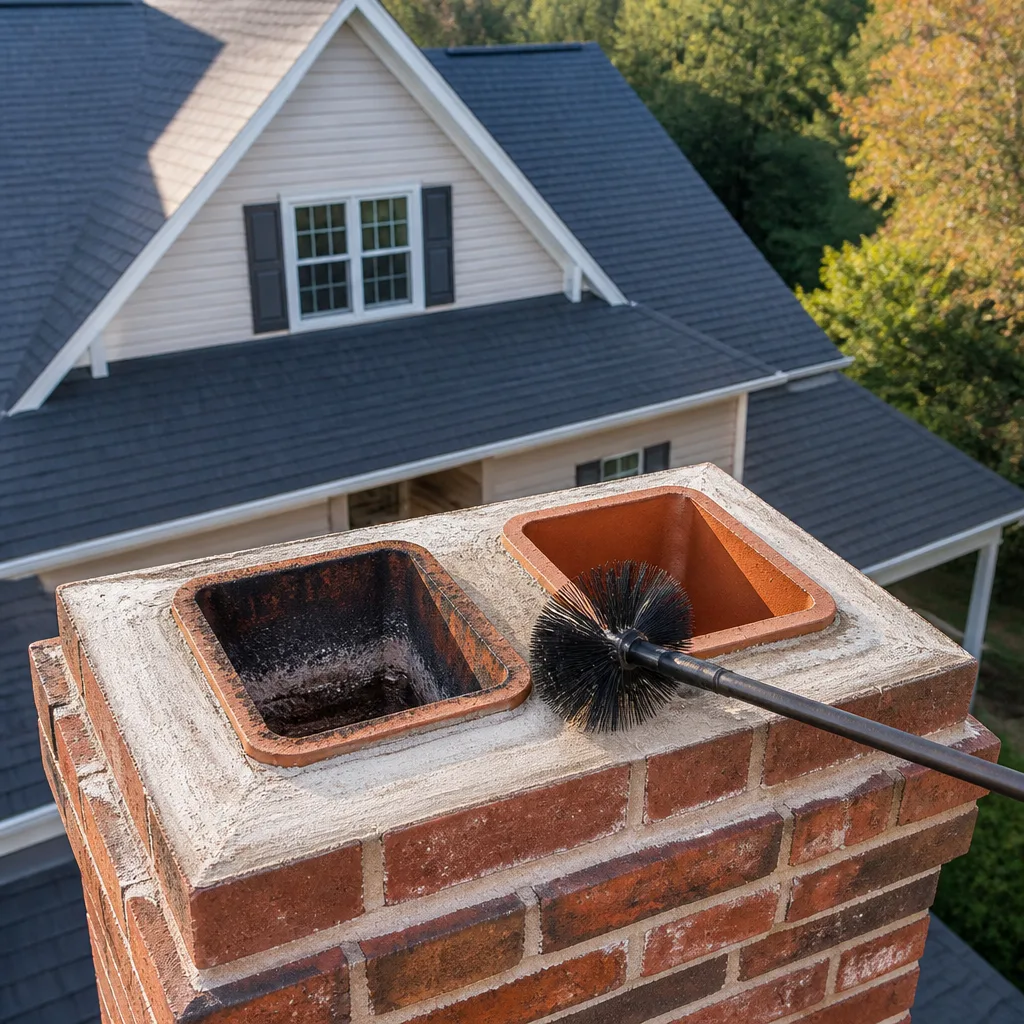 Sweep & inspection
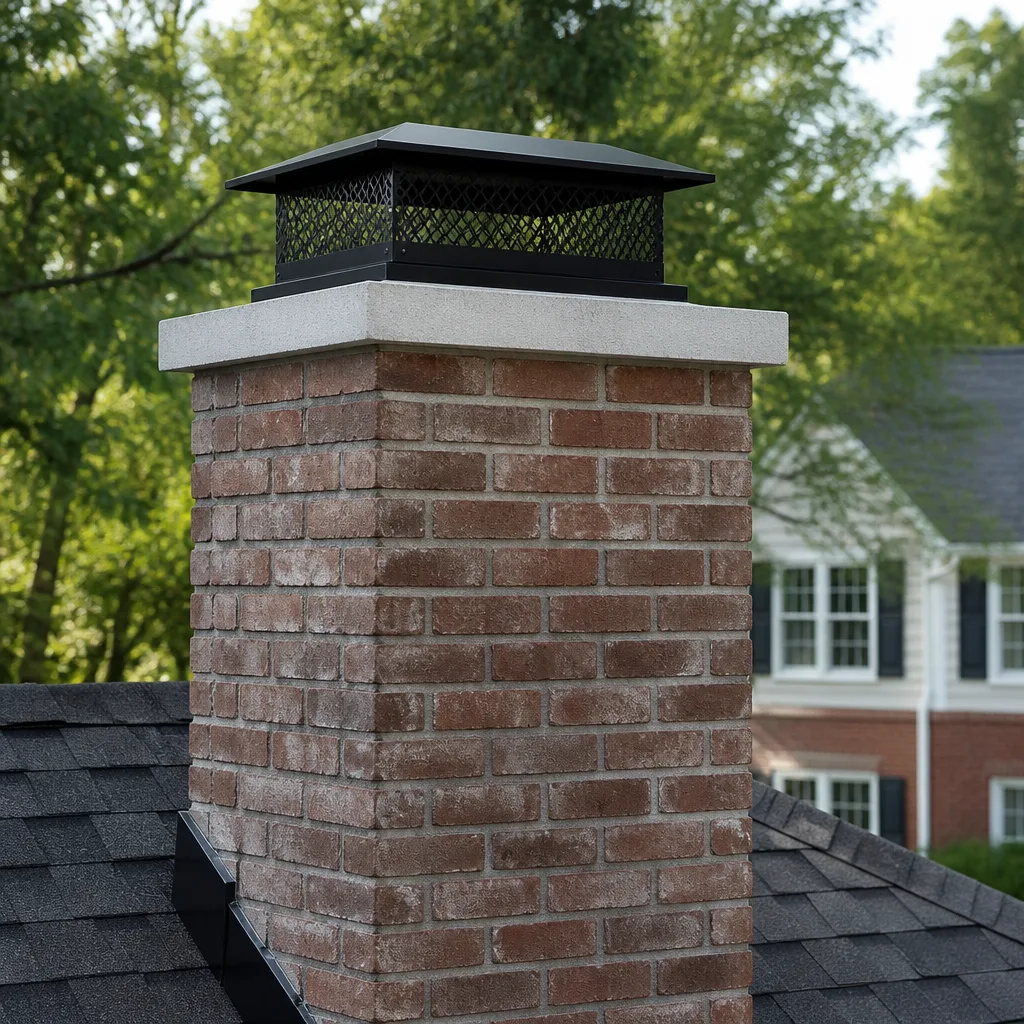 Caps & crowns
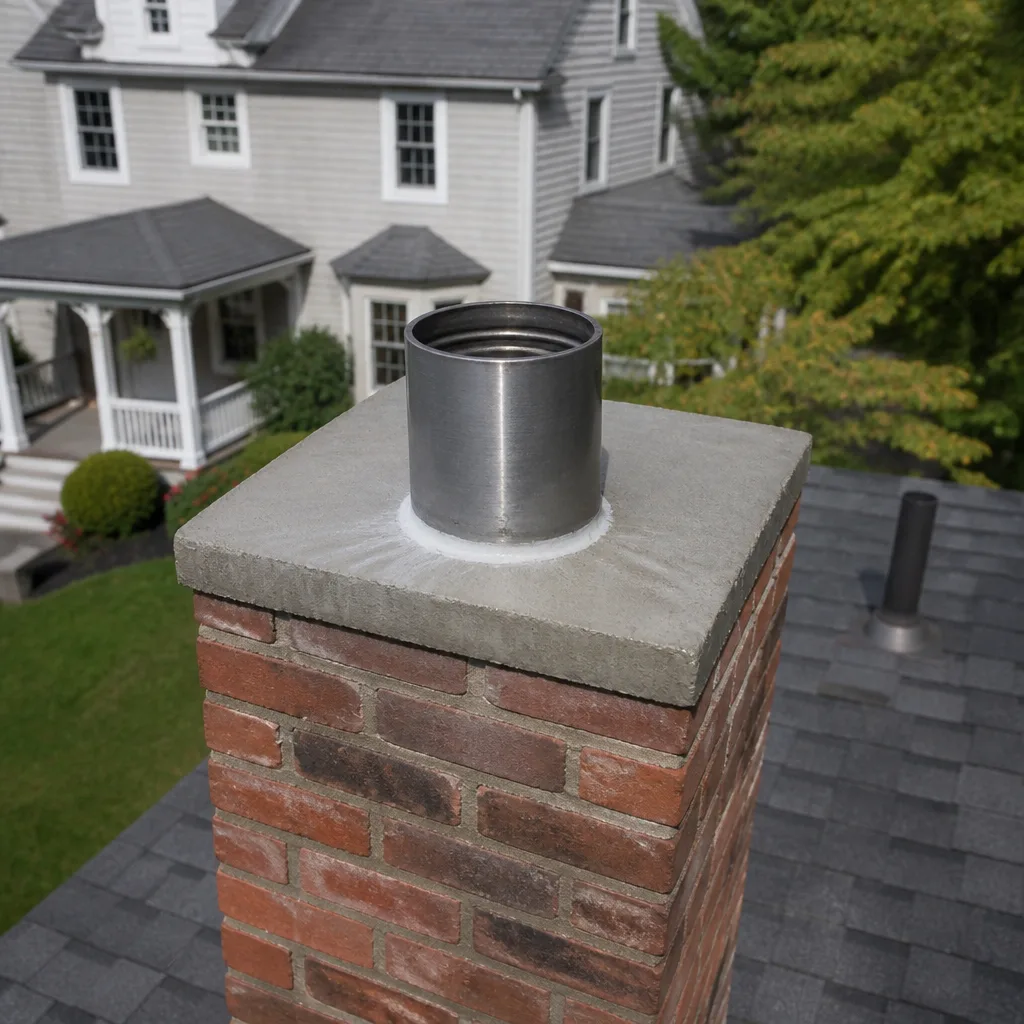 Flue relining
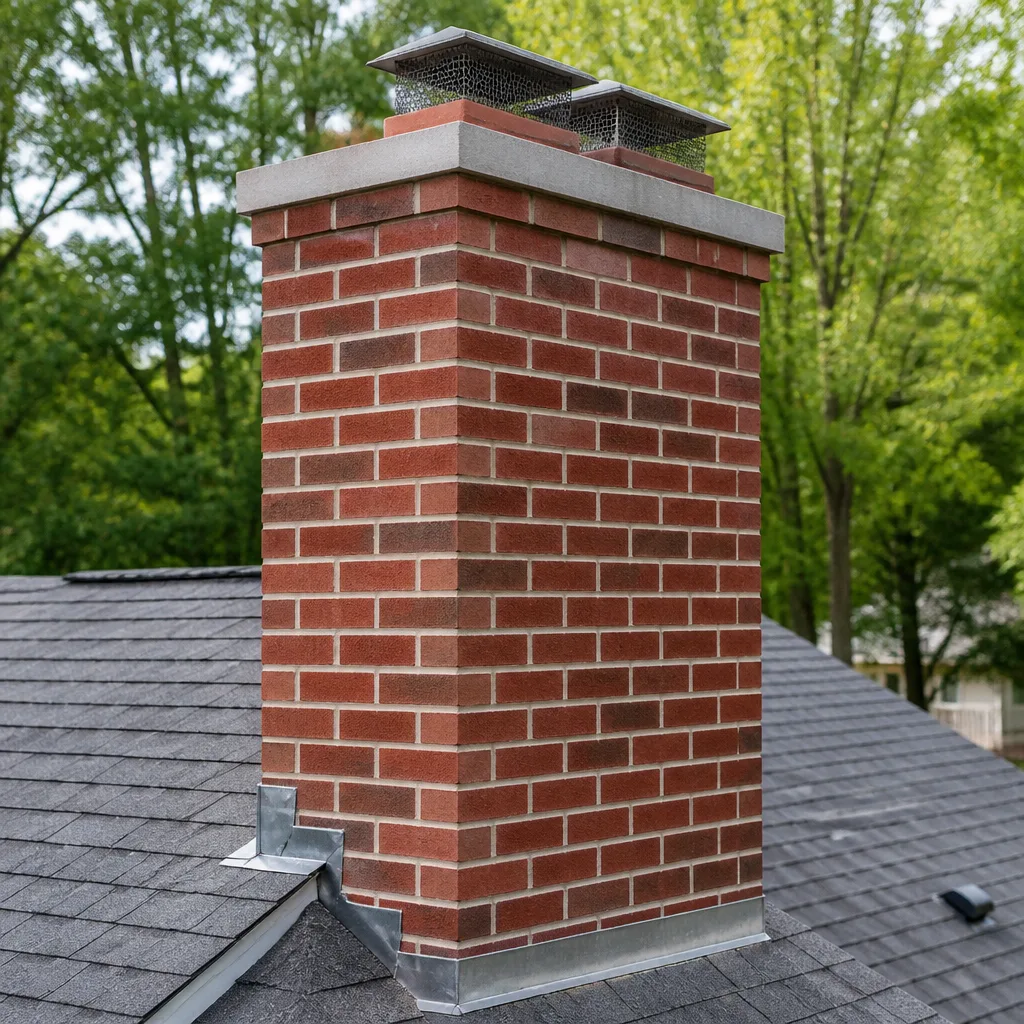 Masonry repair
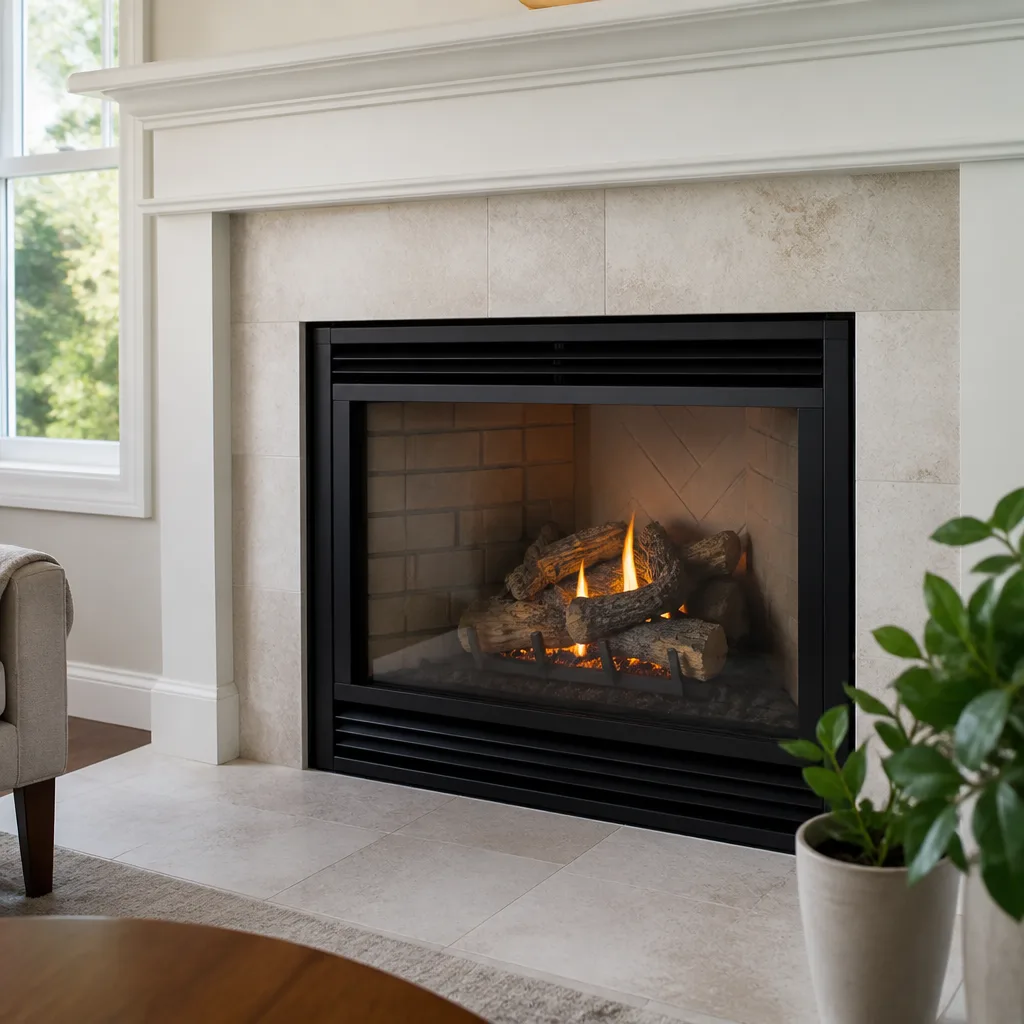 Gas fireplace service
Level 1 sweep and inspection to the NFPA 211 annual standard - flue, crown, cap, and flashing checked and photographed
Chimney sweep logs do not sweep chimneys. They loosen some creosote - which then falls where a brush and vacuum still have to collect it.
Chimney Sweep Maintenance Checklist for Riverton Homeowners
Most people assume the chimney problem an inspection turns up is a thick layer of creosote. In our experience, it’s usually something quieter: a damper that no longer seals, parging in the smoke chamber that has crumbled away, or a chase cover that’s been letting water in for a few winters. None of those show up in how the fire burns, and none of them smell like smoke. They just sit there until they turn into a repair. This guide is a working checklist organized around how the fire in your Riverton home actually burns – masonry, prefab metal, or gas insert – and around this valley’s shoulder seasons, so you check the right things at the right time.
Quick Answer
A chimney maintenance checklist for Riverton homeowners has three tracks: annual sweeping and inspection for wood-burning masonry, yearly flue and cap checks for prefab metal fireplaces (plus a gasket and firebox review), and venting and cap checks for gas inserts. Run the walk-around items in spring and fall, book a professional sweep and camera inspection before burning season, and document what’s found each year so you can spot trouble while it’s still small.
Styles & brands we work with
- Sweep & inspection
- Caps & crowns
- Flue relining
- Masonry repair
- Gas fireplace service
Table of Contents
- Why the Checklist Matters More Than the Annual Reminder
- Checklist A: Wood-Burning Masonry Fireplaces
- Checklist B: Prefab Metal Fireplaces
- Checklist C: Gas and Gas-Insert Appliances
- The Riverton Month-by-Month Maintenance Timeline
- What You Can Safely Check Yourself (and What You Can’t)
- Red-Flag Items That Move You From Maintenance to Repair
- How to Document Your Chimney Year-Over-Year
Why the Checklist Matters More Than the Annual Reminder
“Get your chimney swept once a year” is the advice everyone already knows. It’s also not quite a maintenance plan. A sweep removes what’s in the flue. Maintenance keeps the parts around the flue from failing in the first place: the damper, the smoke chamber, the crown, the cap, the chase cover, the firebox joints, the gasket on a prefab door. On this page we’ve organized the checkpoints by chimney type first, then by season, because the failure points genuinely differ. A homeowner burning hardwood in a masonry fireplace in Riverton is watching for creosote glaze and cracked mortar crowns. Someone with a prefab metal box is watching a gasket and a chase cover. A gas-insert owner is mostly watching for water and obstruction, because there’s no wood smoke to build up.
Around Riverton, the swings between dry summer air and a long, cold burn season put real stress on masonry. Freeze-and-thaw cycles work on any moisture that’s already in the brick or crown. That’s why water management – cap, crown, chase cover, flashing – sits at the center of nearly every maintenance checklist we write. Water damage destroys the chimney from the inside, quietly, and it looks like nothing until a chunk of mortar lands in the firebox.
This guide covers all three chimney types in detail, gives you a season-by-season schedule that fits a northern Utah valley, tells you what’s safe to check on your own, and draws a clear line for the red flags that mean stop burning and call.
Checklist A: Wood-Burning Masonry Fireplaces
Masonry fireplaces and masonry chimneys carry the most parts, so they get the longest checklist. Run through these items visually from the room and, where you can see it, from the firebox opening. Anything that needs a camera or roof access belongs in the professional column.
- Damper operation and seal: Open and close it fully. It should move without grinding, sit flush when closed, and not leave a visible gap. A damper that won’t seal leaks warm air up the flue all winter and lets cold air down when the fire is out.
- Firebox walls and joints: Look for cracked mortar between firebricks and for bricks that have spalled or shifted. Small hairline cracks in firebrick are common; missing mortar joints are not.
- Smoke shelf and smoke chamber: This is the sloped cavity above the damper. You can usually see part of it with a strong light. Jagged, crumbling parging here is one of the most commonly missed defects, and it’s where a HeatShield ceramic resurfacing assessment often begins.
- Flue interior: From the firebox opening you can see the bottom few feet. Creosote that looks like shiny black glass or tar is glaze, and it needs professional removal, not a chimney log.
- Crown: The concrete cap at the top of the chimney. Cracks wider than a hairline, or a crown that has pulled away from the flue tile, let water in.
- Cap or spark arrestor: Present, intact, and sized correctly. A missing cap is the single most common way water and animals get into a masonry chimney.
- Exterior mortar and flashing: From the ground, look for crumbling mortar between exterior bricks and for gaps where the chimney meets the roofline.
- Chase cover, if you have an exterior chase: A rusted or loose chase cover is a water entry point that many homeowners don’t know they have.
If you want a proper chimney sweep, that sweep should come with a documented condition report. A sweep without an inspection is half a service.
Checklist B: Prefab Metal Fireplaces
Prefab fireplaces are built as a system: a steel firebox, a listed chimney section, and a chase that runs up through or along the house. The metal itself rarely fails. What fails is everything around it – gaskets, seals, the chase cover, and the cap. Check these from the room and from the ground, and leave the chase interior and pipe joints to a professional.
- Door gasket: The rope gasket around the glass door should be soft, complete, and pressed against the frame. A worn or flattened gasket pulls air past the door and makes the fire harder to control.
- Glass and door latch: Cracked glass or a latch that doesn’t pull the door tight is a repair item, not a cleaning item.
- Firebox panels: Look for cracks in the refractory panels or liners. Hairline surface cracks are normal; cracks that go through the panel are not.
- Baffle and brick retainers: These metal parts inside the firebox should be in place and not warped or sagging.
- Chase cover: If the chimney runs up an exterior chase, the metal cover on top is doing the job a masonry crown does. Rust-through or a loose edge is a water entry point.
- Cap: The termination cap at the top of a prefab chimney keeps out rain, birds, and debris. It should be intact, attached, and matched to the pipe.
- Pipe joints and clearances: Not a homeowner check. The chimney sections and their clearances to combustible material need a professional eye, usually with a camera.
When a prefab cap or chase cover needs replacing, sizing and material matching matter. We fit Gelco, Olympia, and Famco caps and covers so the part matches the pipe instead of being a big-box compromise. Homeowners who want to know the full scope of what we handle can start at Chimney Sweep Riverton.
Checklist C: Gas and Gas-Insert Appliances
Gas appliances have no creosote to sweep, but they do have venting, and in many homes they have a chimney around that venting that can still take on water. Gas work itself is a licensed trade – a gas line or burner issue is not a homeowner repair – so the checklist here is about observation, not adjustment.
- Pilot and burner flame: A steady blue flame with a small yellow tip is normal. A mostly yellow, lazy flame or a flame that lifts off the burner needs a qualified technician.
- Odor: Any gas smell means stop, ventilate, and call your gas utility. That’s not a maintenance item.
- Glass condition: Soot streaks or a white film on the glass can point to incomplete combustion or venting trouble. A haze is often just condensation; heavy soot is a signal.
- Venting termination and cap: The vent cap at the top should be intact and unobstructed. Nests or debris in a gas vent are a real hazard and call for professional clearing, not a broom handle.
- Carbon monoxide alarms: Working CO alarms on every level and outside sleeping areas are part of any gas-appliance maintenance routine. Test them.
- Water intrusion: A gas insert in a masonry chimney still has a crown and a cap over it. Water that gets past them soaks masonry that has nothing to do with the fire.
If anything on a gas appliance needs service beyond a visual check, we handle the chimney and venting side and coordinate the gas-appliance side with a qualified technician. Our fireplace repair service covers the parts of the system around the appliance.
The Riverton Month-by-Month Maintenance Timeline
A checklist tied only to “before winter” misses half the maintenance window. Riverton sits in a high desert valley with a long, cold burn season and a wide swing between summer heat and winter freeze. That means the most useful checkpoints land in the shoulder seasons – spring and early fall – with lighter walk-arounds during the burn season itself.
- March through April (post-burn-season review). The burn season winds down. Now is when the winter’s wear is fresh and visible: check the crown, cap, chase cover, and exterior mortar before summer heat and the next freeze cycle get to any damage. Book a sweep and inspection if you skipped it in fall.
- May through June (water management season). Before the summer storms, confirm the cap, crown, chase cover, and flashing are sound. Water intrusion is easiest to fix when the chimney is dry and contractors are less booked.
- July through August (repair window). If a camera inspection turned up parging or liner issues, or you need a repair on the firebox, this is the practical window – the chimney is dry, and repair work finished now is tested before it’s under snow. HeatShield resurfacing and chimney repair both fit this slot.
- September through October (pre-burn-season readiness). The main professional checkpoint of the year: sweep, camera inspection, and a written condition report before the first fire. Confirm the damper seals, the cap is on, and CO alarms are working.
- November through February (in-season walk-around). Do a short monthly visual: damper seal, firebox, glass, cap condition from the ground. If the fire back-drafts or the glass soots up heavily, stop and get it looked at.
Timing isn’t about speed. It’s about catching the right defect in the right season, before it becomes repair work.
What You Can Safely Check Yourself (and What You Can’t)
Knowing the line between a safe check and a dangerous one is the most important part of any maintenance plan. A homeowner can look, open, close, and listen. A homeowner should not climb on a roof, open an electrical panel, touch a gas line, or reach into the flue above the firebox.
- Safe to check from the firebox opening: Damper operation and seal, cracked mortar in firebox joints, the bottom few feet of flue, visible smoke shelf parging, and the condition of the glass and gasket on a prefab or insert door.
- Safe to check from the ground: The cap or spark arrestor (present and intact), the crown (from a safe distance with binoculars), exterior mortar, and any obvious chase-cover rust.
- Needs camera inspection: The upper flue, the full smoke chamber, any offset in the flue, and pipe joints in a prefab system. A small camera tells you far more than a mirror ever will.
- Needs roof access: The top of the crown, the cap fit, the flashing where the chimney meets the roof, and the chase cover. Roof work is height work, and it belongs to a trained professional.
- Never a homeowner job: Any gas line work, electrical work, or structural masonry. And never open a chimney firebox to “reach in and pull something out” while a fire is going.
One safety note we make on every chimney visit: creosote and the resulting chimney fire risk are real, and a chimney fire can start from a slow buildup you can’t see from the room. We don’t give step-by-step DIY instructions for the parts that involve a flue, a roof, or a gas line. Look, record, and call.
Red-Flag Items That Move You From Maintenance to Repair
Maintenance versus repair isn’t always a judgment call. Some findings are automatic escalations. Here’s the list we use, described specifically so you know what you’re seeing.
- Glaze-stage creosote: Shiny, tar-like, or glass-like buildup in the flue. This is not routine sweep removal – it needs professional cleaning and a documented inspection before the next fire.
- Cracked firebrick with missing mortar joints: When brick is loose or mortar joints are gone, heat can reach the structure behind the firebox. That’s a fireplace repair, not a cleaning item.
- Damper that won’t seal or is seized: A damper that won’t fully close lets heat and cold air pass all season and can make the fire hard to control. It needs repair or replacement.
- Crumbling smoke chamber parging: Jagged, rough, or missing parging in the smoke chamber is a common cause of poor draft and a hotspot for deterioration. HeatShield ceramic resurfacing can restore a compromised liner without a full reline – and we’ll tell you honestly which your flue actually needs.
- Crown cracks and a detached crown: A crown that’s pulled away from the flue tile or shows cracks beyond a hairline is a water problem waiting. Repair it before the next freeze cycle.
- Rusted-through chase cover or missing cap: Either one lets water straight into the chase or flue. Chimney cap and crown work isn’t cosmetic – it’s the first line of defense against water that destroys masonry from the inside.
- A liner that’s cracked or hasn’t been confirmed sound: A camera inspection is the only way to know. If the liner isn’t sound, a mechanical reline (we install DuraFlex flex liner systems) or a resurfacing may both be on the table.
How to Document Your Chimney Year-Over-Year
A checklist is only as good as the record it produces. A chimney doesn’t fail in one season – it trends. Small cracks widen, parging sheds a little more each year, and a damper gets harder to close. When you keep a simple record, you catch the trend while the fix is still small.
- Start a chimney file. A folder, a binder, or a scan in one place. Note the date of each check, who did it, and what was found.
- Photograph what you can. A dated photo of the crown, the cap, the chase cover, and the firebox from the room. Same angle each time is what makes the comparison useful.
- Keep the written condition report. When a professional inspects, get the report in writing – not a phone call. That document is the baseline the next year gets measured against.
- Write down repairs and upgrades. A new cap, a resurfaced liner, a repaired crown – note what and when. The next inspection should know what’s already been replaced.
- Review the file before each season. Two minutes in September to read the last two years tells you whether anything is getting worse, and whether you’re due for a professional sweep or camera inspection.
That record is also the answer to the question every homeowner asks: how do I know the recommended work is real? We document what we find with photos and a written report, so you can see it yourself. And when something can safely wait, we’ll say so.
Common Mistakes to Avoid
- Treating the annual sweep as the whole plan. The sweep clears the flue. The damper, crown, cap, and chase cover are the parts that fail between sweeps. Check them every year, not just when you have the chimney cleaned.
- Skipping the spring check because the fire is out. In Riverton, the freeze-thaw cycle is hardest on the crown and exterior masonry after the burn season. Catching a crack in spring is a smaller repair than catching it in fall.
- Assuming a prefab fireplace needs no maintenance. Prefab metal fireplaces don’t build creosote like masonry, but the gasket, chase cover, and cap still wear. A failing chase cover is one of the most common water-intrusion fixes we make.
- Burning “cleaning” logs instead of a sweep. A chimney log doesn’t remove glaze-stage creosote, and it doesn’t inspect anything. It gives a false sense of done.
- Ignoring the smoke chamber because it’s not the flue. The smoke chamber is where poor draft problems often start, and crumbling parging there is easy to miss and easy to spot with a camera.
- Not keeping a record. A chimney that’s “fine” this year and “fine” next year is a data point only if you wrote down what “fine” meant. Without the file, you can’t tell a trend from a fresh start.
- Letting a gas appliance go unchecked because “it doesn’t need sweeping.” Gas inserts don’t build creosote, but venting and caps still need a look – and any flame or odor change on a gas appliance is a call, not a checklist item.
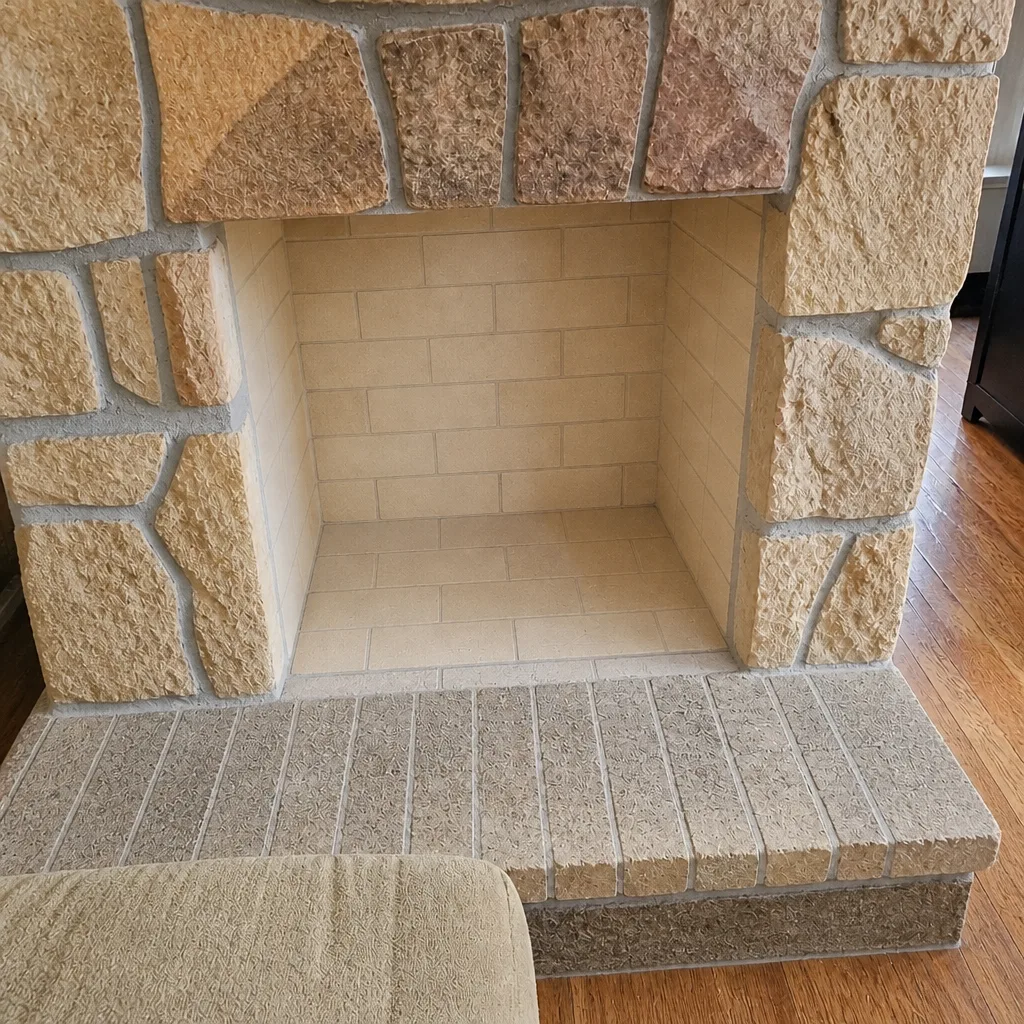
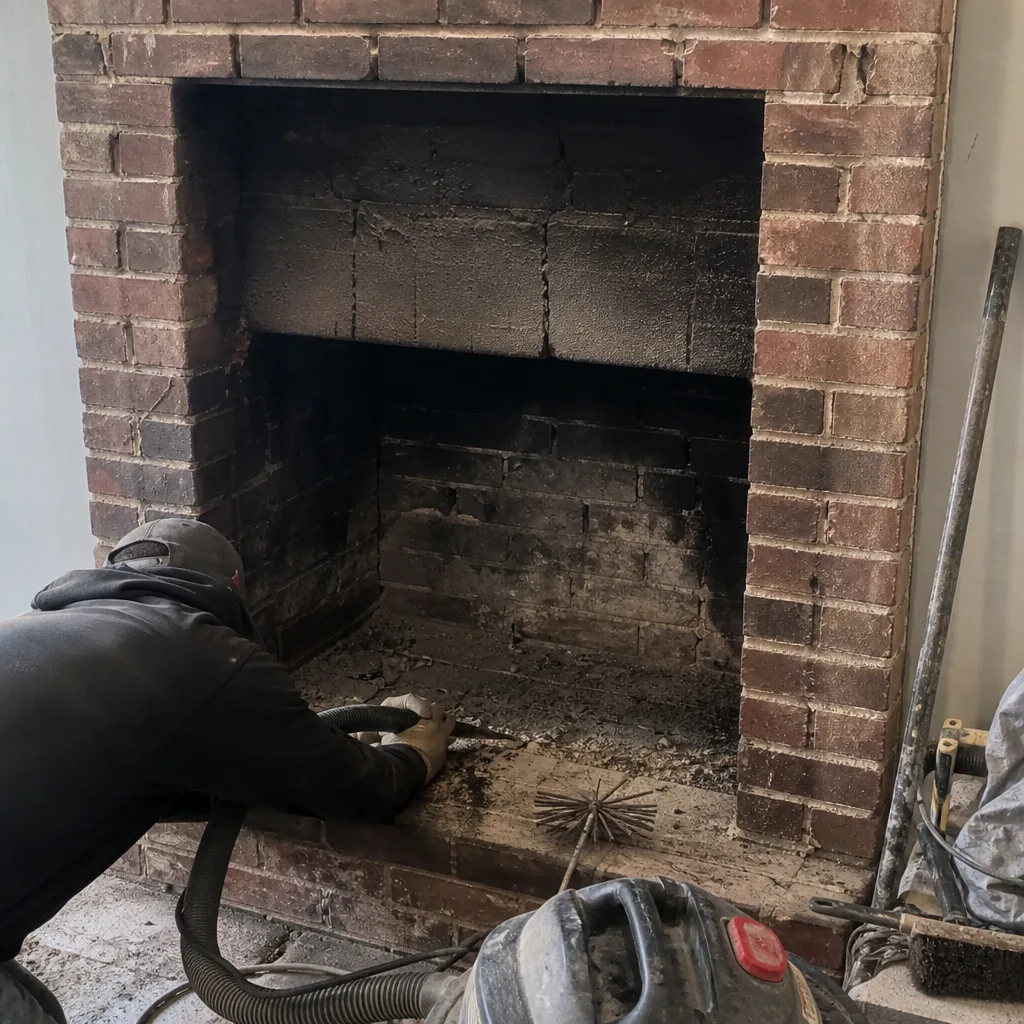
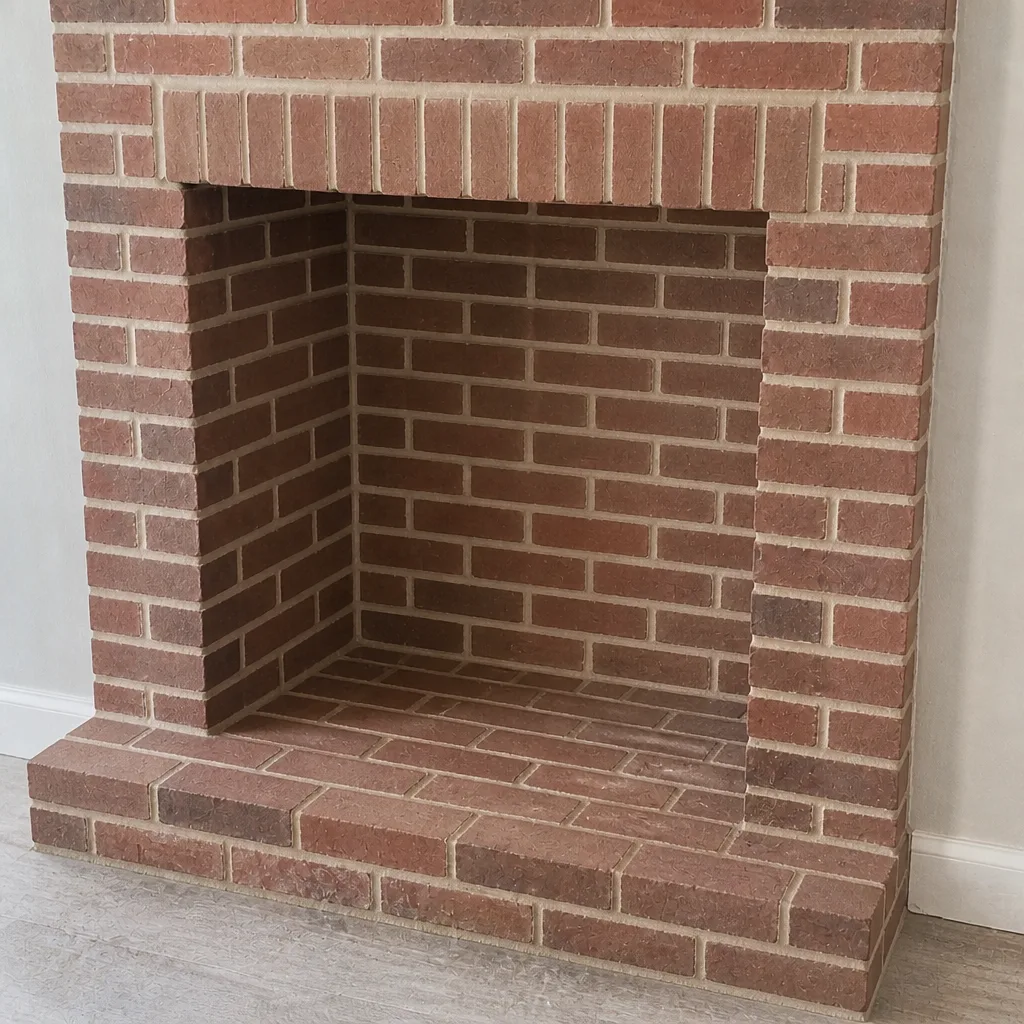
See the difference
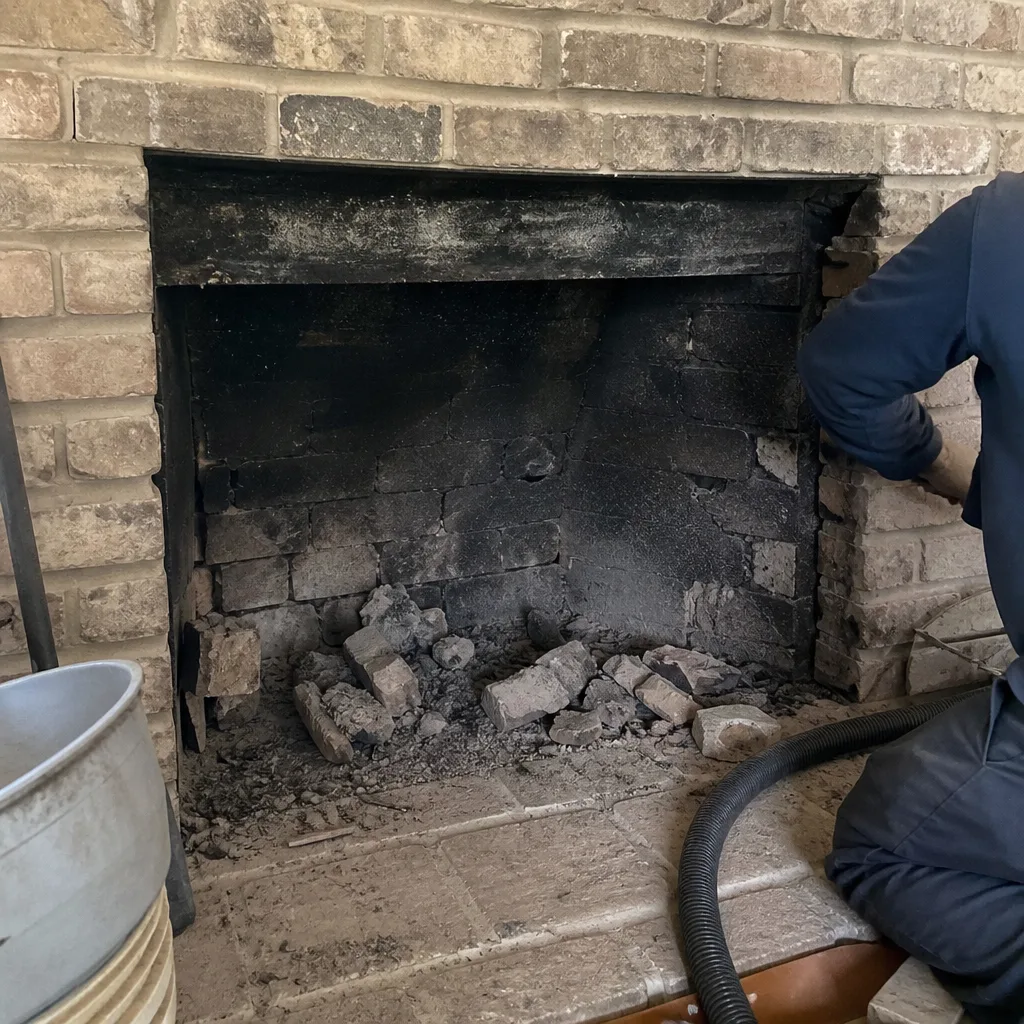 Before
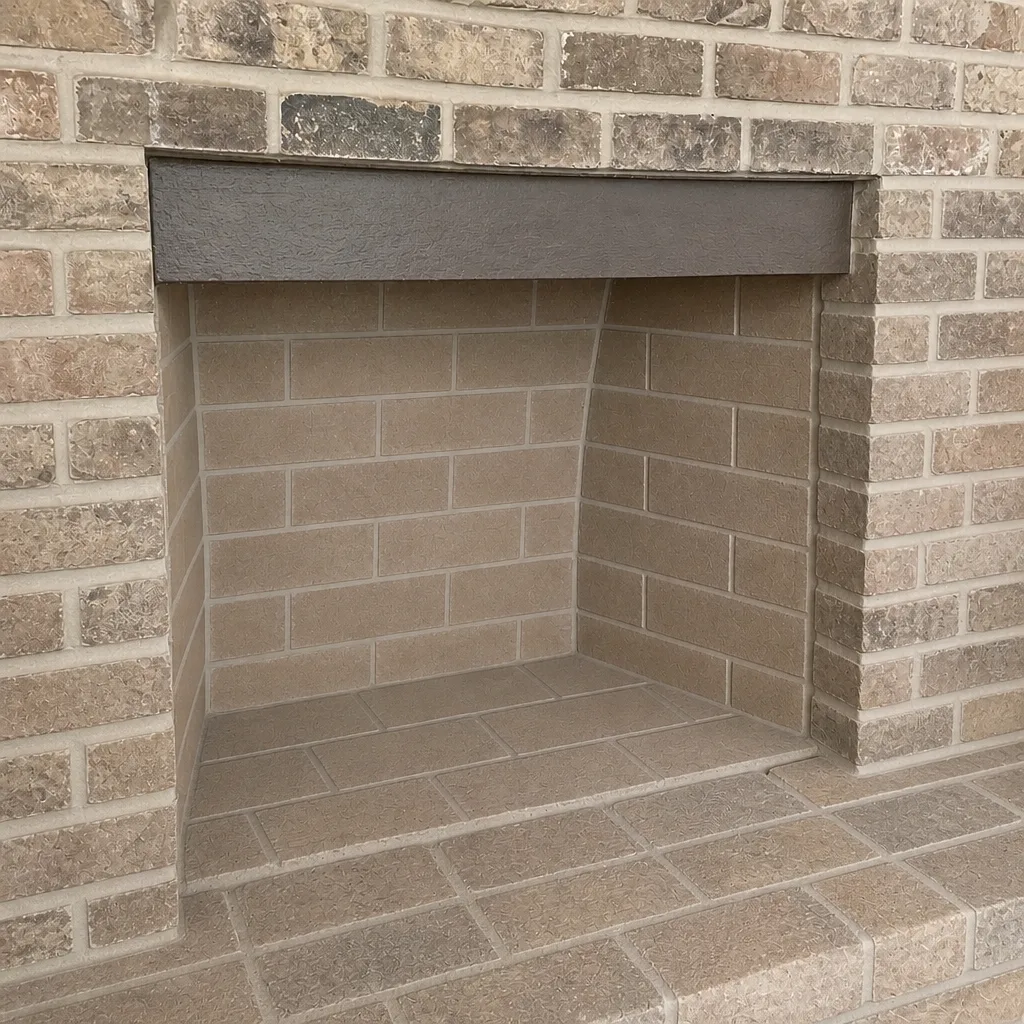 After
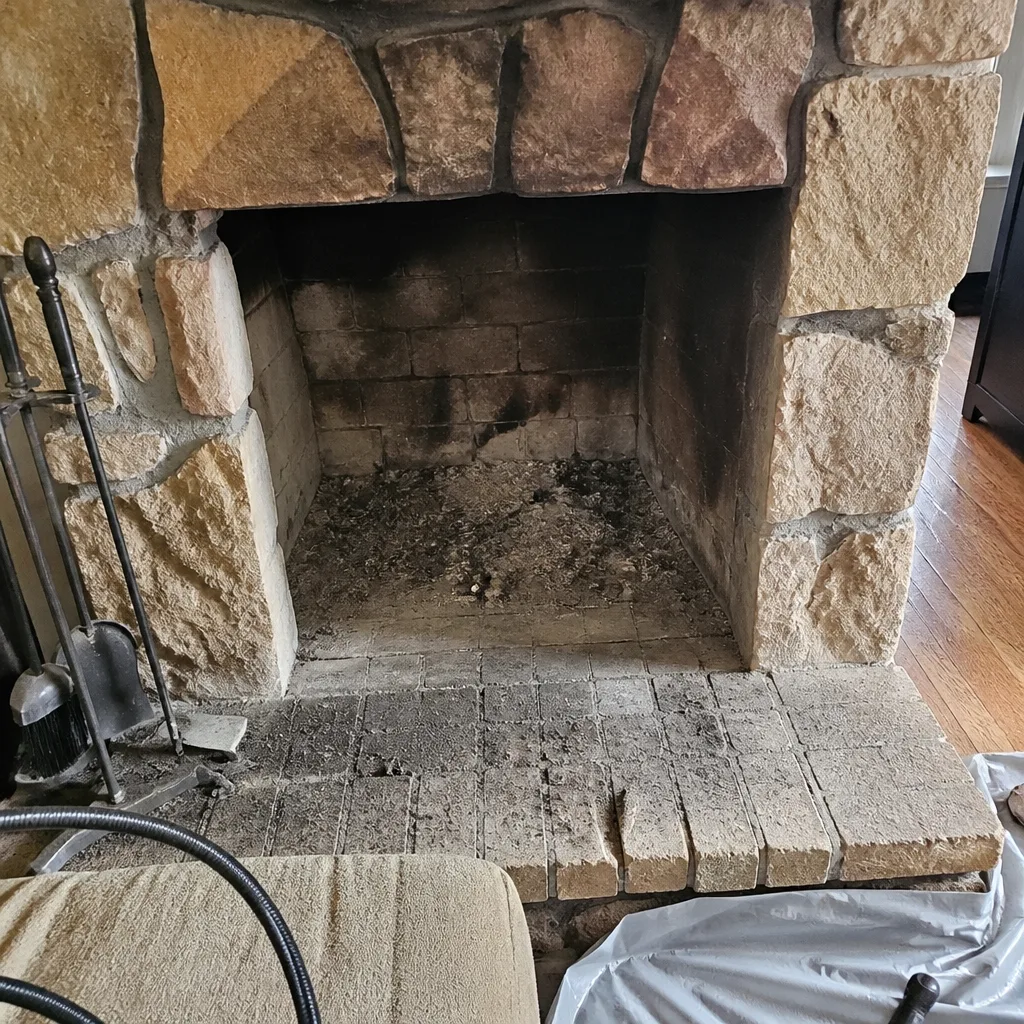 Before
 After
 Before
 After
When to Call a Professional
Call a professional when you see glaze-stage creosote, a damper that won’t seal or has seized, cracked firebrick with missing mortar, crumbling smoke chamber parging, a crown that’s cracked or pulled away, a missing cap, or a chase cover you can see rust through. Call before your next burn season if you’re not sure when the chimney was last swept or inspected. Call before lighting the fireplace if it’s been sitting idle for a season. And call if you hear a chimney fire or smell burning in the house. Our technicians have up to 9 years of experience, and we document what we find before we recommend anything. Chimney Sweep Riverton offers free estimates in Riverton – call (833) 468-5704. We answer 24/7. Fast dispatch from 7am to 7pm, Sunday through Friday, and we’re closed Saturday.
Frequently Asked Questions
The damper seal is the single most useful thing to check, because it’s the part homeowners interact with most and it fails quietly. Open and close it with your hand each fall; if it doesn’t seat flush, it needs repair or replacement before the burn season. The crown and cap come close behind. Call (833) 468-5704 for an exact quote on a full inspection.
For a wood-burning fireplace, a yearly sweep and inspection is the right baseline, and it’s what nearly every chimney professional recommends regardless of how many cords you burn. If you burn sparingly, the inspector will tell you honestly whether the flue needs cleaning this year or just an inspection. Book before the burn season starts. Call (833) 468-5704.
Most chimney sweeps in the Riverton area are priced per job by a written estimate, and the estimate is free. We quote based on what the flue actually needs after inspection, not a flat number before anyone’s seen it. Call (833) 468-5704 for an exact quote – estimates are free.
Gas inserts have no wood smoke or creosote, so there’s nothing to sweep, but the vent cap, venting, and the chimney around the vent still need a check, and any flame or odor change is a call. Gas appliance work is a licensed trade, so we coordinate with a qualified technician where needed. Call (833) 468-5704 to book a chimney-side check.
You can safely check the damper, the firebox joints, the bottom few feet of flue from the firebox opening, and the cap and crown from the ground. Anything above the firebox, any roof work, any gas line, and any electrical component needs a trained professional. Camera inspection is the reliable way to see the full flue. Call (833) 468-5704 for an inspection.
Twice a year – once in spring, once in fall – and after any big storm. Caps crack, crowns pull away from the flue tile, and chase covers rust through, and all of those let water into masonry. A quick look from the ground with binoculars covers most of it. Call (833) 468-5704 if anything looks cracked or missing.
The Bottom Line
A maintenance checklist that works is a checklist built for your actual chimney and your actual season. Masonry fireplaces in Riverton need creosote watch, damper checks, and crown and cap inspection. Prefab metal fireplaces need gasket, baffle, chase cover, and cap checks. Gas inserts need venting, cap, and water management checks with a qualified technician for the appliance side. Put the big professional checkpoints in the shoulder seasons – late spring and early fall – and keep a simple record each year. The parts that fail quietly are the parts you maintain between sweeps. From the firebox to the cap, every component falls within our scope, and we’ll document what we find before we recommend any repair.
Ready to put this checklist to work? Call (833) 468-5704 for a free estimate. We answer 24/7. Fast dispatch from 7am to 7pm, Sunday through Friday, and we’re closed Saturday. Chimney Sweep Riverton handles chimney sweep, inspection, fireplace repair, chimney repair, and chimney cap and crown installation, and we work with DuraFlex, HeatShield, Gelco, Olympia Chimney, Famco, and Copperfield materials. If you’d rather start with a documented condition report and no repair commitment, that’s exactly what our inspection service is for.
Written by the team at Chimney Sweep Riverton.