
Last updated November 24, 2026
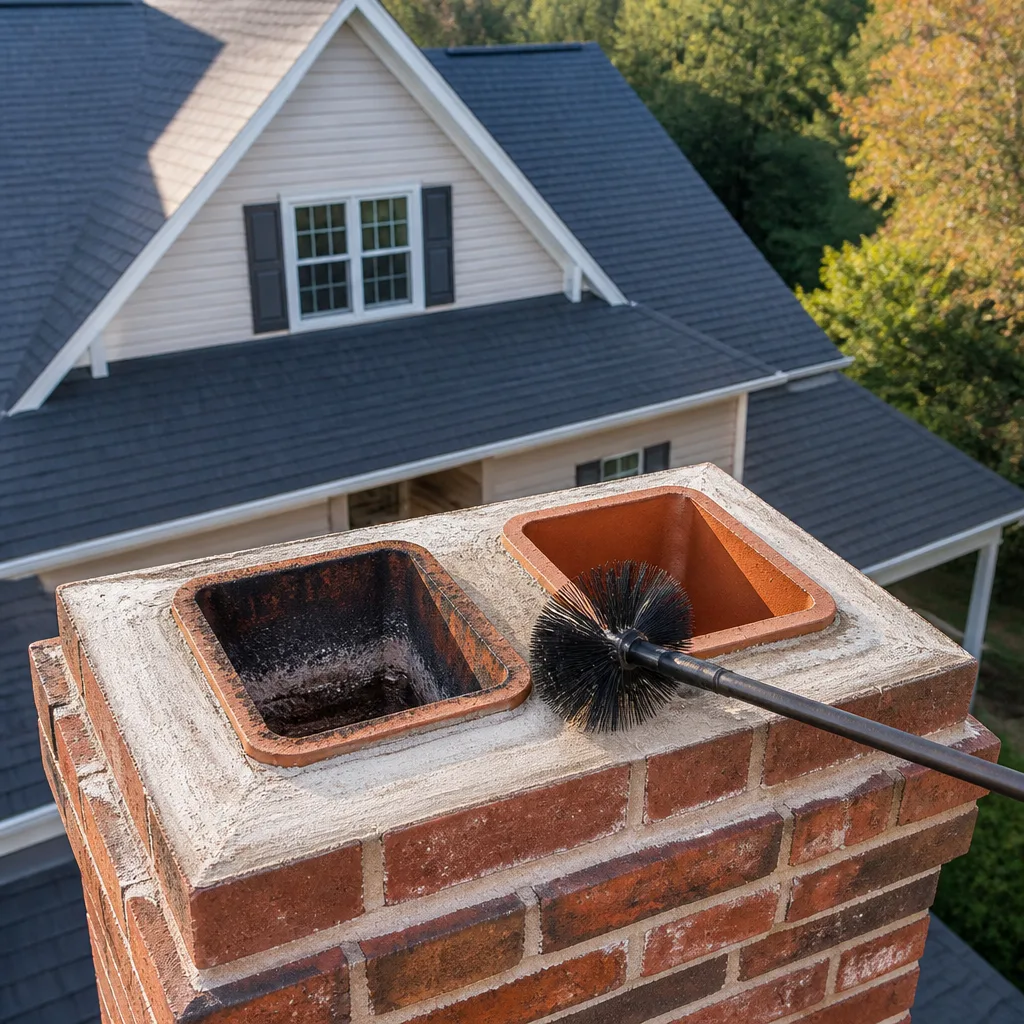 Sweep & inspection
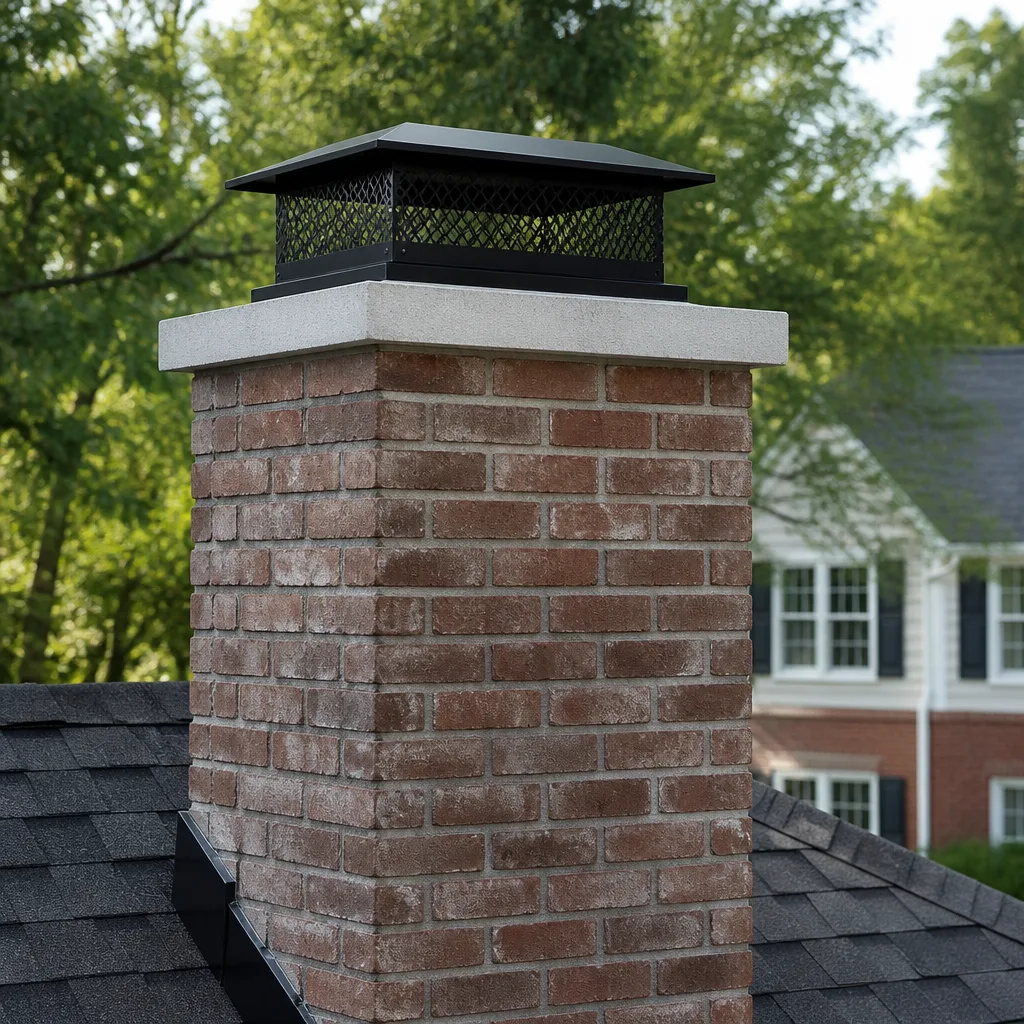 Caps & crowns
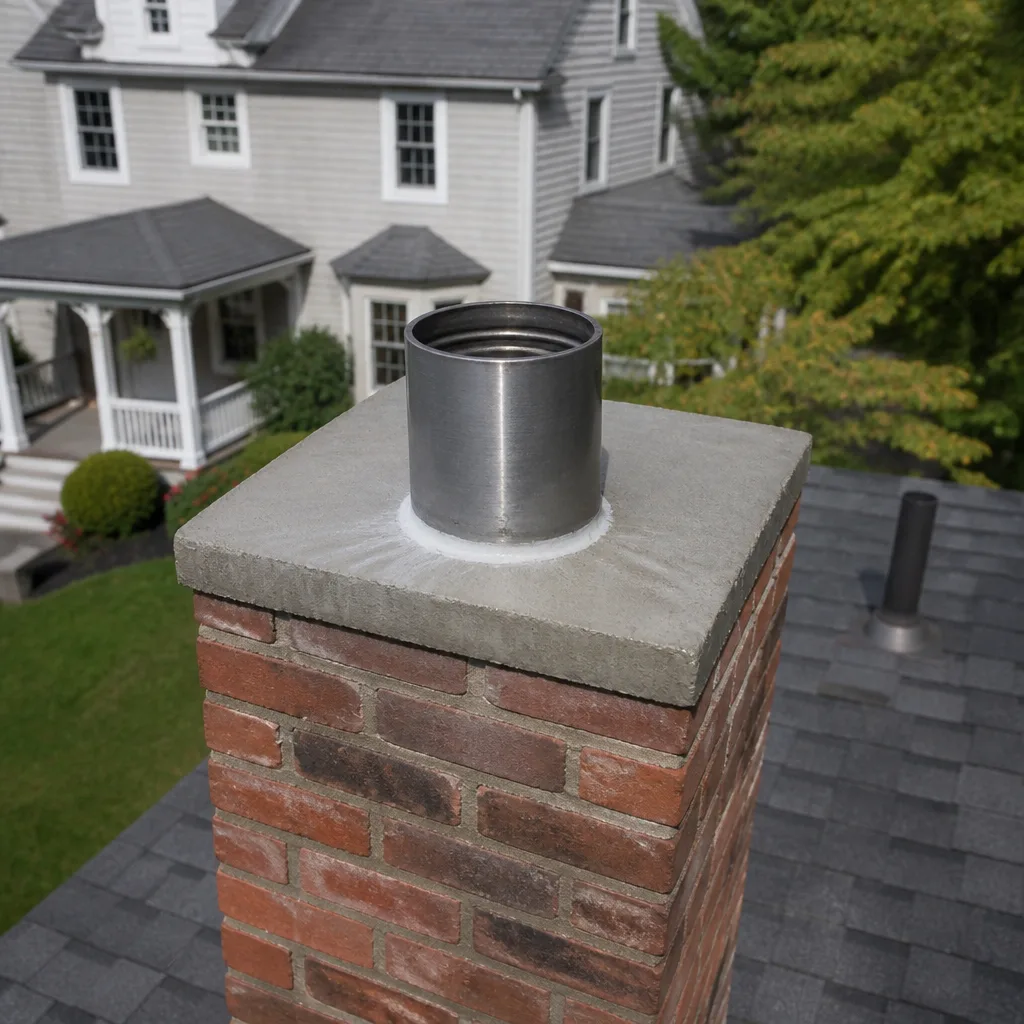 Flue relining
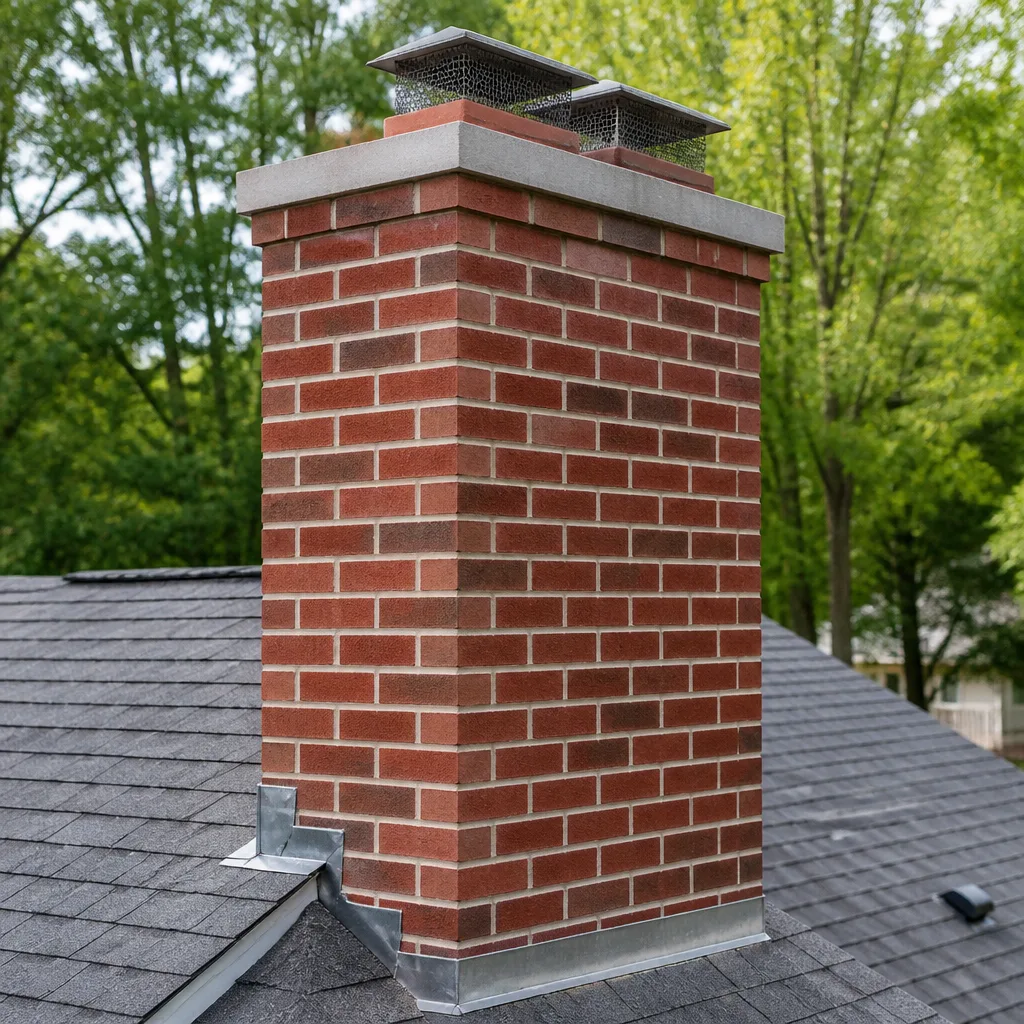 Masonry repair
 Gas fireplace service
Level 1 sweep and inspection to the NFPA 211 annual standard - flue, crown, cap, and flashing checked and photographed
Chimney sweep logs do not sweep chimneys. They loosen some creosote - which then falls where a brush and vacuum still have to collect it.
DIY vs Professional Chimney Cleaning: The Riverton Homeowner’s Decision Guide
You can buy the same chimney brush a professional uses for under $80. What you can’t buy at that price is the knowledge of what to look for after the brush comes back down, and that gap is where DIY chimney work usually fails. The cleaning itself is the easy part; the diagnosis is the hard part. Most homeowners in Riverton who get into trouble with a DIY sweep don’t do it because the flue was still dirty. They do it because they swept, saw nothing alarming from the firebox, and assumed everything above was fine. This guide defines the real boundary between a sensible DIY job and one that needs a trained eye, so you can decide with clear conditions instead of guesswork.
Quick Answer
DIY chimney cleaning is reasonable only when three things are true at once: your flue is a straight, accessible masonry or factory-built type you can reach from the roof or firebox, a professional has inspected the chimney within the last year and found no defects, and you’re dealing with light, stage-one creosote. In every other case, and in every case where you can’t verify those conditions, professional cleaning plus an inspection is the safer call. The cleaning is not the risky part. Skipping the inspection that should come with it is.
Styles & brands we work with
- Sweep & inspection
- Caps & crowns
- Flue relining
- Masonry repair
- Gas fireplace service
Table of Contents
- Where the DIY Decision Boundary Actually Sits
- The Four Conditions That Make DIY Sweeping Reasonable
- Creosote Stages: What You Can Clean and What You Can’t
- Tools, PPE, and the Realistic DIY Cost vs. One Professional Visit
- The Diagnostics You Can’t Do Without a Camera or Training
- How Utah Insurers Treat Fire Claims After DIY Maintenance
- Riverton Climate, Housing, and Why Local Conditions Matter
- The Decision Flowchart: Clean, Clean and Inspect, or Call First
Where the DIY Decision Boundary Actually Sits
Most chimney safety advice splits into two camps: “always hire a pro” or “you can do it yourself with a brush and a ladder.” Both are too blunt for Riverton homeowners who burn wood through the cold months and want a straight answer. The honest position sits in the middle, and it’s narrower than most DIY guides admit.
Here’s the framing that matters. A chimney sweep is a physical task: you run a brush through a flue and pull the soot and creosote out. That part is learnable. A chimney chimney sweep as a professional service is a compound job: sweep, then inspect the full system from firebox to cap, then document what you found. The compound job is what keeps a house safe. When a homeowner does the first half and skips the second, they’ve done the easy half and left the important half undone.
So the decision boundary is really about the inspection, not the brush. If the inspection requirement is already satisfied and the flue condition is known, DIY cleaning is a fair choice. If the inspection is overdue, unknown, or the last one flagged an issue, DIY cleaning removes the chance to catch a problem before it becomes a repair.
Why the risk profile is different in Riverton
Riverton sits in the Salt Lake Valley, and the valley’s winter inversions trap cold air and combustion byproducts close to the ground. That doesn’t change what creosote is, but it does change how often a household runs the fireplace. When the fireplace is the evening anchor for five or six months, the flue accumulates faster than a household that lights a fire a dozen times a season. More burning means the creosote layer thickens sooner, and the line between “sweep it yourself next weekend” and “this needs a professional now” gets crossed quietly.
Housing age matters too. Riverton grew fast through the 1990s and 2000s, and a large share of the housing stock is now old enough that original flue liners and crowns have had time to develop hairline cracks, spalled mortar, and gaps at the flue tile joints. A homeowner sweeping their own flue from the roof won’t see any of that. It’s above the damper, behind the tiles, or under the cap. That’s the part of the job where a trained eye earns its cost.
The Four Conditions That Make DIY Sweeping Reasonable
If you want to sweep your own chimney in Riverton, all four of these should be true. If any one is false or unknown, that’s the signal to book a professional visit instead. Treat this as a checklist, not a menu.
- A professional inspected the chimney within the last year and found no defects. “Within the last year” is the working standard most chimney professionals use, and it’s the anchor for this whole decision. If the last inspection is older, or if there’s no record, you don’t have the baseline you need to sweep safely.
- Your flue is a type you can actually reach and clean from the firebox or roof. Straight masonry flues and standard factory-built metal chimneys are cleanable from the firebox with the right rods or from the roof with a top-down brush. Offset flues, flues with offsets or sharp angles, and flues with damaged or inaccessible cleanout doors are not DIY territory.
- The creosote is light and dry, not glazed. Stage-one creosote is flaky, sooty, and comes off with a brush. Stage-two is crusty and harder to remove. Stage-three is glazed, tar-like, and does not come off with a brush at all, no matter how hard you push. If you don’t know your stage, see the next section.
- The chimney cap, crown, and flashing are in good repair. If the cap is missing or loose, water is already getting in, and cleaning without fixing that is putting the cart ahead of the horse. Cap and crown work is one of the most common fixes on Riverton chimneys, and it’s not a DIY brush job.
One more condition that’s worth stating explicitly: you need the physical ability to work safely on a roof or from a step ladder with a drop cloth and a vacuum rated for fine soot. If roof access means an extension ladder on a slope or reaching over a gutter, that’s a no. Ladder falls are the single most common injury in this trade, and they happen to trained professionals too.
What “straightforward flue” means in practice
A straight flue you can see from the damper to the top with a bright light and no offset is the ideal DIY candidate. If you point a strong flashlight up the flue and lose sight of the interior before the top, or if you see an angle or a jog in the tile, that’s an offset. Offsets collect creosote unevenly and are much harder to brush clean from below. They’re a real reason to book a professional sweep, not a matter of preference. If you want the full picture on what a professional sweep involves, our Chimney Sweep Riverton page walks through the full service from top to bottom.
Creosote Stages: What You Can Clean and What You Can’t
Creosote is the residue left behind when wood smoke cools against the flue walls. It forms in three recognizable stages, and the stage determines whether a brush will work at all. This is the single most useful thing a homeowner can know before deciding to sweep their own chimney.
- Stage one: sooty and flaky. Looks like black dust or thin soot. Wipes off on a rag. A brush removes it readily, and a homeowner with a proper brush and rods can handle this.
- Stage two: crusty and brittle. Darker and harder, clings to the flue wall in a crunchy layer. A brush will get some of it, but a professional sweep with the right head and technique is usually needed to get it fully off.
- Stage three: glazed and tar-like. Shiny, hard, and dense. It does not come off with a brush. It’s the stage that most increases your chimney fire risk, and it requires professional mechanical or chemical removal.
You can see stage-one accumulation from the firebox with a flashlight. You generally cannot see stage-two or stage-three accumulation reliably without a camera run up the flue. That’s the practical reason a homeowner shouldn’t assume “it looked light from the firebox, so it must be light all the way up.” A camera run is the standard way a professional verifies what’s actually going on.
Why wet wood multiplies the problem in Riverton
Creosote volume is driven mostly by two things: burn temperature and wood moisture. Wood that hasn’t seasoned properly burns cooler and produces more smoke, which condenses faster into creosote on the flue walls. In the Salt Lake Valley, where wood is often bought late in the season or stored under a tarp that traps moisture, unseasoned wood is common. The result is a flue that loads up faster than the homeowner expects. A professional sweep will usually ask what wood you’ve been burning, and it’s a fair question: it changes how often you should be cleaning.
If your last professional inspection is more than a year old, the creosote stage is genuinely unknown, no matter how good your firewood is. That’s the point at which DIY cleaning starts to become a guess.
Tools, PPE, and the Realistic DIY Cost vs. One Professional Visit
The tools for a DIY sweep are widely available and not especially expensive on their own. The realistic total, once you add up every item you actually need, is closer to a professional visit than most homeowners expect. Here’s what a proper DIY setup requires:
- Chimney brush sized to your flue. The wrong size either won’t clean the corners or will jam. You need to know your flue’s interior dimensions before buying.
- Rods (or a rope-and-weight system) long enough to reach the top. Rods need to be stiff enough not to whip, which matters for keeping the brush aligned to the flue walls.
- Drop cloth and a shop vacuum rated for fine soot. A standard household vacuum will clog or blow soot into the room. This is a near-certainty, not a maybe.
- Step ladder or roof access that’s genuinely safe. If you need to buy or rent a ladder for the job, that cost goes into the DIY tally.
- PPE: N95 or better respirator, eye protection, gloves, and old clothes you can throw away. Soot and creosote are the kind of thing you don’t want in your lungs or on your skin.
- A strong flashlight for the firebox and a mirror for the smoke shelf. The smoke shelf is where creosote and soot collect out of sight, and a mirror is the only way to check it without a camera.
Add those up and you’re typically in the same range as a single professional visit, sometimes more once you count the ladder and the vacuum. And the professional visit includes the inspection, which the DIY kit does not. That comparison is why so many Riverton homeowners who start down the DIY path end up booking a professional chimney sweep after the first attempt: the cost gap closes and the inspection side is still unaddressed.
What you can’t price into a DIY kit
The gap that stays open no matter how much equipment you buy is diagnostic ability. A camera run, an understanding of what a cracked flue tile means, and the judgment to know when a repair can wait and when it can’t. That’s where the cost comparison actually lives. Spending the same money on a professional visit that includes a documented condition report gives you more information than the DIY kit ever can. If the flue turns out to need chimney repair, having the report is what lets you plan the work instead of reacting to a chimney fire.
The Diagnostics You Can’t Do Without a Camera or Training
The inspection is the part of the job that DIY cannot substitute for, and it’s worth being concrete about what that means. These are the checks a trained technician makes that a homeowner with a flashlight and a mirror generally can’t, either because they need specialized equipment or because they need the trained eye to interpret what they’re seeing.
- A camera run of the flue interior. A flexible inspection camera shows cracks in the flue tiles, gaps at the joints, missing mortar, and the true creosote stage above the damper. This is the check that turns “I think the flue looks fine” into “the flue is documented as fine.”
- The smoke chamber and smoke shelf. Above the damper, the smoke chamber narrows and the smoke shelf catches soot and debris. Both are regularly missed by a firebox-only clean and are prime spots for creosote to sit unnoticed.
- The crown and cap. Hairline cracks in the crown and gaps at the cap are the two most common points of water intrusion. Water damage to masonry starts small and gets expensive. Neither is visible from the ground and both are easy to miss from the roof without the trained eye.
- Flue tile integrity and liner condition. A cracked flue tile allows heat and gases to escape the flue and reach framing or masonry. That is not something a homeowner can safely call from a flashlight glance.
- Draft and backdraft behavior. Some Riverton homes have draft problems from tight house construction or from a chimney height that’s marginal against the prevailing wind. A trained technician can diagnose the cause; a homeowner generally can’t.
- Whether repair can safely wait. This is the judgment a homeowner most often lacks, and it’s the one that actually saves money. Being told “this is fine for another year” is worth as much as being told “this needs fixing now.”
If a professional inspection turns up a deteriorating flue interior that doesn’t yet require full relining, ceramic resurfacing with HeatShield is a real option that restores the liner without a full reline. Where the liner is beyond resurfacing, a DuraFlex flex liner system is the mechanical path. Matching the repair to the actual flue condition is the reason a professional inspection exists. A brand-new cap fitted right the first time is the other half of that equation, which is why we fit Gelco, Olympia, and Famco caps sized to the chimney rather than whatever the hardware store has on the shelf.
What a documented inspection gives you beyond the visit
An inspection performed as a standalone service gives you a written, photographed condition report you own. Our chimney repair work is built on that report, not on a sales pitch delivered from the roof. That matters when you’re deciding what to do, and it matters more when you’re filing an insurance claim. Which brings us to the next section.
How Utah Insurers Treat Fire Claims After DIY Maintenance
Utah homeowner insurance policies generally do cover accidental chimney fires, but nearly every standard policy includes a duty-of-maintenance clause that requires the homeowner to keep the property reasonably maintained. If a fire claim is filed and there’s no documented professional sweep or inspection in recent history, and the fire is traced to neglected creosote, the insurer can reduce or dispute the claim. The exact outcome depends on the policy and the specific facts, but the risk is real and it’s the reason documentation matters.
The practical takeaway: a professional sweep and inspection produces a written record with a date on it. That record becomes the answer to “when was this chimney last maintained?” in the event of a claim. A DIY sweep produces no such record, no matter how thorough it was. If you sweep your own chimney and later file a fire claim, you have no third-party documentation that the work was done, by whom, or when.
What to keep, whether you DIY or hire
- A dated written inspection report from a professional. This is the single most valuable document for insurance purposes.
- Photos of the flue, crown, cap, and firebox from the inspection. Our inspection reports include photos for exactly this reason.
- Records of any repairs and the brand of materials used. We document the products we install, whether that’s HeatShield resurfacing or a DuraFlex liner, so the record stays complete.
- A log of your own sweeps if you DIY between professional inspections. It won’t carry the same weight as a professional report, but it’s better than nothing.
The pattern to notice is that the insurance question is really the documentation question. And the documentation problem gets solved by the same inspection a professional sweep includes. That’s why an inspection that produces a written report, without a commitment to repair on the same visit, is the anchor for the whole decision.
Riverton Climate, Housing, and Why Local Conditions Matter
Riverton’s chimney conditions are shaped by three local factors: the winter inversion that pushes households to burn more through the cold months, the age of the housing stock, and the type of wood that’s commonly available in the Salt Lake Valley. Each of them changes what “cleaning often enough” actually means in this city.
The inversion is the big one. When the cold air gets trapped under a warm layer, wood smoke and creosote emissions don’t disperse. Households respond by burning more consistently through the winter, which loads the flue faster than a household in an area with better air flow. Riverton homeowners who burn most evenings from November through February are typically looking at a sweep once a year at minimum, and sometimes more if the wood isn’t well seasoned.
Housing age and the cap-and-crown problem
A large share of Riverton’s housing went up in the 1990s and 2000s. That’s old enough for original crowns to have developed hairline cracks and for original caps to have lost their seals or blown loose in a windstorm. Both are the two most common points of water intrusion on a chimney, and both are the kind of thing that an inspection catches and a homeowner sweep misses. Water damage to masonry starts inside the structure and works its way out, so by the time it’s visible from the ground it’s already done real work. Cap and crown work fits naturally into the same visit as the sweep and the inspection, which is why our fireplace repair service and our chimney cap and crown installation are designed to be done together with the sweep, not as a separate contractor visit.
Wood supply and burn quality
Wood in the Salt Lake Valley often comes from local suppliers or from homeowners who split and stack their own. Seasoning time matters: properly seasoned wood produces less smoke and less creosote, and wood that’s still wet burns cool and produces more. If you’re not certain your wood is seasoned, plan to sweep sooner. That’s not a sales pitch, it’s just how creosote forms.
Not sure which camp you’re in? An inspection is the fastest way to find out. Our team has up to 9 years of experience on Chimney Sweep Riverton’s inspections, and we’ll document what we find whether or not you choose to have us sweep. From the firebox to the cap, every component falls within our scope, and we can work with your insurer if a claim ever matters.
The Decision Flowchart: Clean, Clean and Inspect, or Call First
Answer these questions in order. The first one you can’t answer with a clear “yes” tells you what to do.
- Was your chimney inspected by a professional within the last year, and did the inspector find no defects? If yes, continue. If no, go to step four.
- Is your flue a straight, accessible flue you can see from the damper to the top? If yes, continue. If no, go to step four.
- Is the visible creosote light and flaky (stage one), with no glazed or tar-like buildup? If yes, you can clean it yourself and still book a professional inspection within the next few months. If no, go to step four.
- Call a professional first. The cleaning itself isn’t the problem; the missing inspection is. This is the case for most Riverton homeowners, and it’s the right answer more often than not.
One more question after step three: is the chimney cap or crown visibly damaged or missing? If yes, add a cap or crown repair to the list, and book it in. If no, you can proceed with the DIY sweep and then schedule the inspection as planned.
What each branch actually means
- Clean yourself: you met all four conditions, you own or are willing to buy the equipment, and you’ll still schedule a professional inspection within the year.
- Clean yourself and schedule an inspection: the DIY sweep is fine, but the inspection is the point. Book it before the sweep so you have a baseline, or immediately after if the last inspection is current.
- Call a professional first: one of the conditions is missing or unknown. Book a sweep and inspection as a single visit, get the documented report, and let the report tell you whether repair is needed.
If the report comes back clean, you’ll know it can safely wait. If it comes back with a repair, you’ll have the evidence in front of you and no guessing. Either way, the homeowner who knows what’s actually in their flue is in a better position than the one who brushed it and hoped.
Common Mistakes to Avoid
- Sweeping without knowing the creosote stage. If you’re cleaning the flue when there’s stage-three glazed creosote inside it, you’re brushing over the worst of it and moving on. You need a camera run before you can rule out the dangerous stage.
- Skipping the smoke chamber and smoke shelf. A firebox-only clean misses the two places above the damper where soot and creosote collect. If your brush stops at the damper, you’ve cleaned less than half the flue.
- Ignoring a loose cap or a hairline crack in the crown. Riverton’s wind and freeze-thaw cycle work on both. A cap that looks “close enough” is letting water in at the top of the flue, which is the most expensive place for water damage to start.
- Burning unseasoned wood to get through the winter. Wet wood produces more creosote, and more creosote means a shorter interval between sweeps. If you’re not sure the wood is seasoned, sweep sooner.
- Assuming “it looked fine from the firebox” covers the whole flue. The part above the damper is where the creosote and the flue tile damage usually live, and it’s the part you can’t see without a camera.
- Doing the DIY sweep with no paper trail. If you ever file a chimney fire claim, your insurer will ask when the last documented maintenance was. A DIY sweep with no record is not documentation.
- Buying a brush the wrong size for the flue. A brush that doesn’t contact the flue walls on all sides cleans unevenly, and a brush that’s too large can jam. Measure the flue first, or have a professional measure it for you.
Safety caveat: creosote fires, carbon monoxide, and the part nobody should DIY
Creosote in stage three is genuinely flammable, and a chimney fire is a serious event. It can be quiet at first, then burn hot enough in a matter of minutes to crack flue tiles and reach the framing of the house. Carbon monoxide is the other real risk: if the flue is blocked or the draft is compromised, combustion byproducts can back up into the living space. If you smell smoke in the house, see soot or creosote around the fireplace surround, or hear a rumbling sound from the chimney, treat it as a professional emergency and get a trained technician out to inspect before lighting another fire. Don’t sweep over it yourself. Our team can check it as part of a chimney repair visit and give you a straight answer on what’s actually happening.
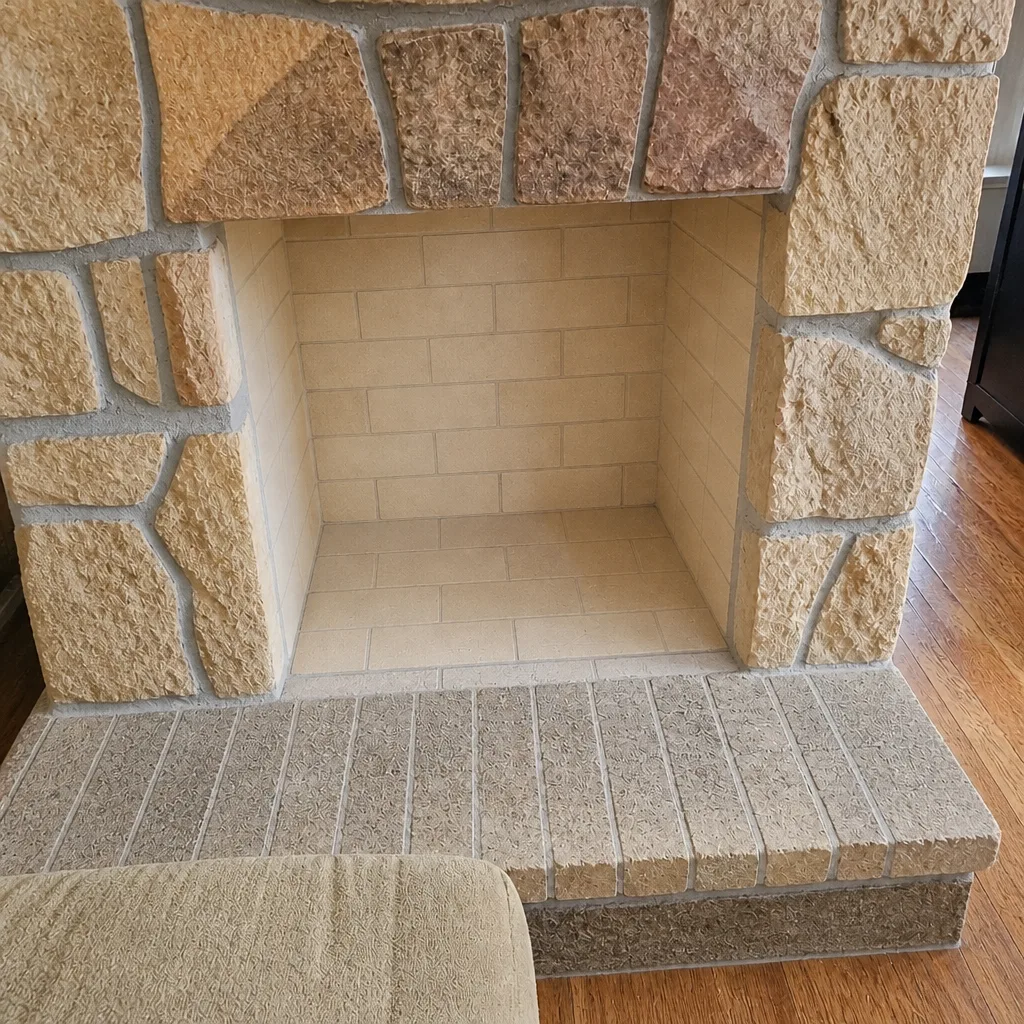
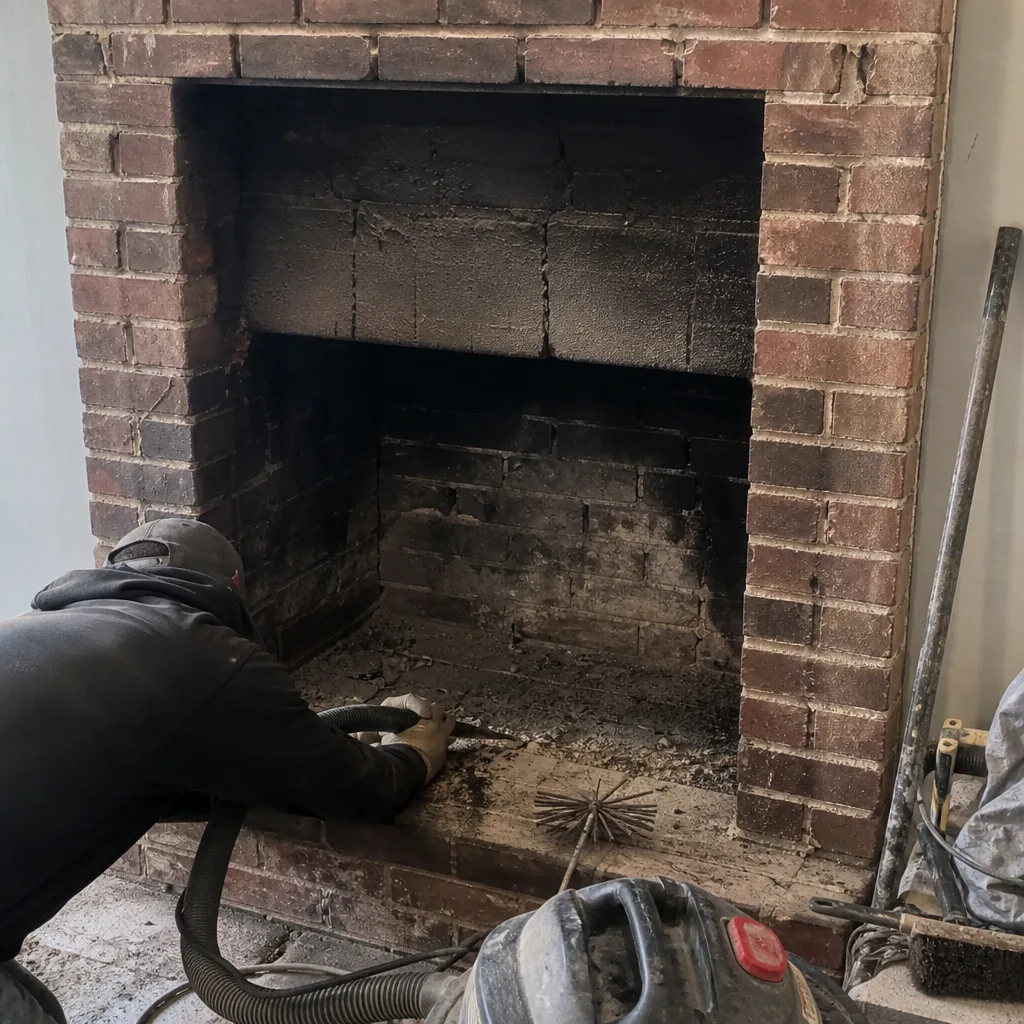
See the difference
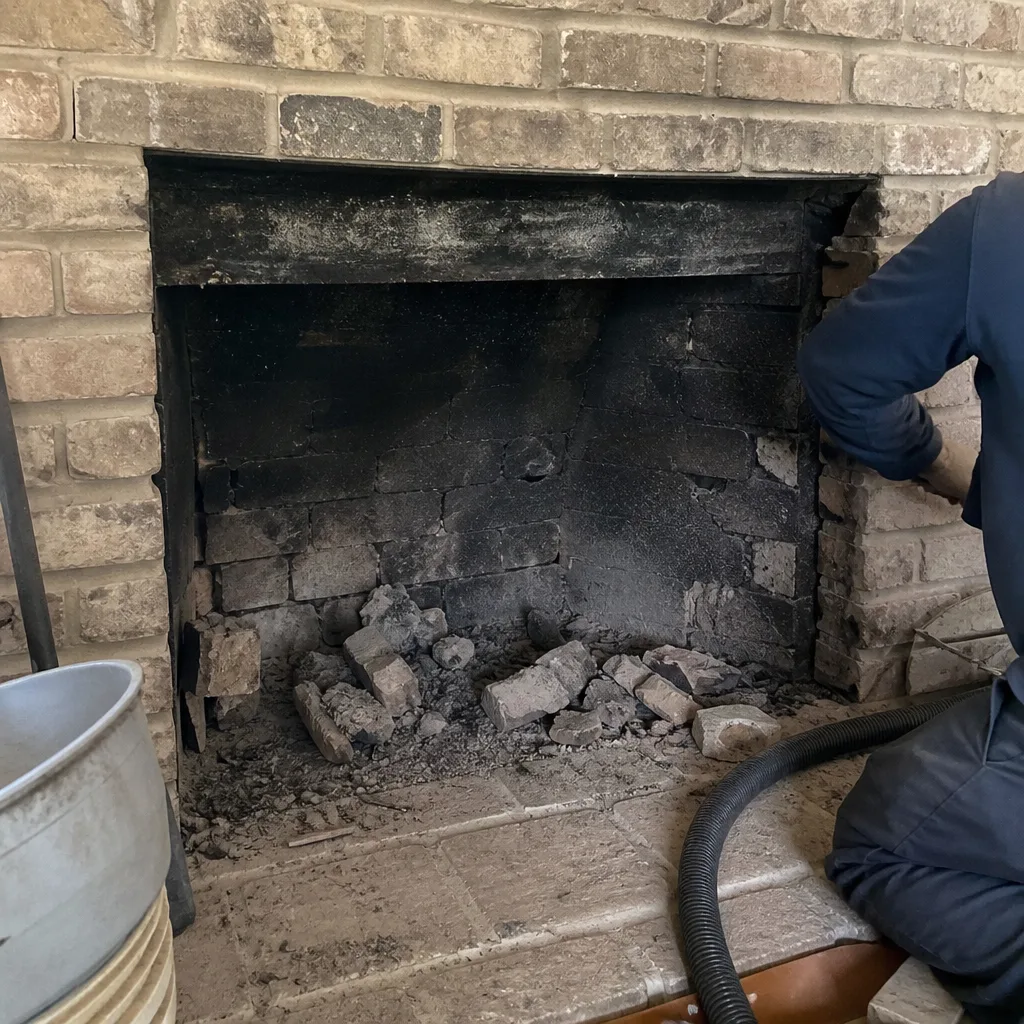 Before
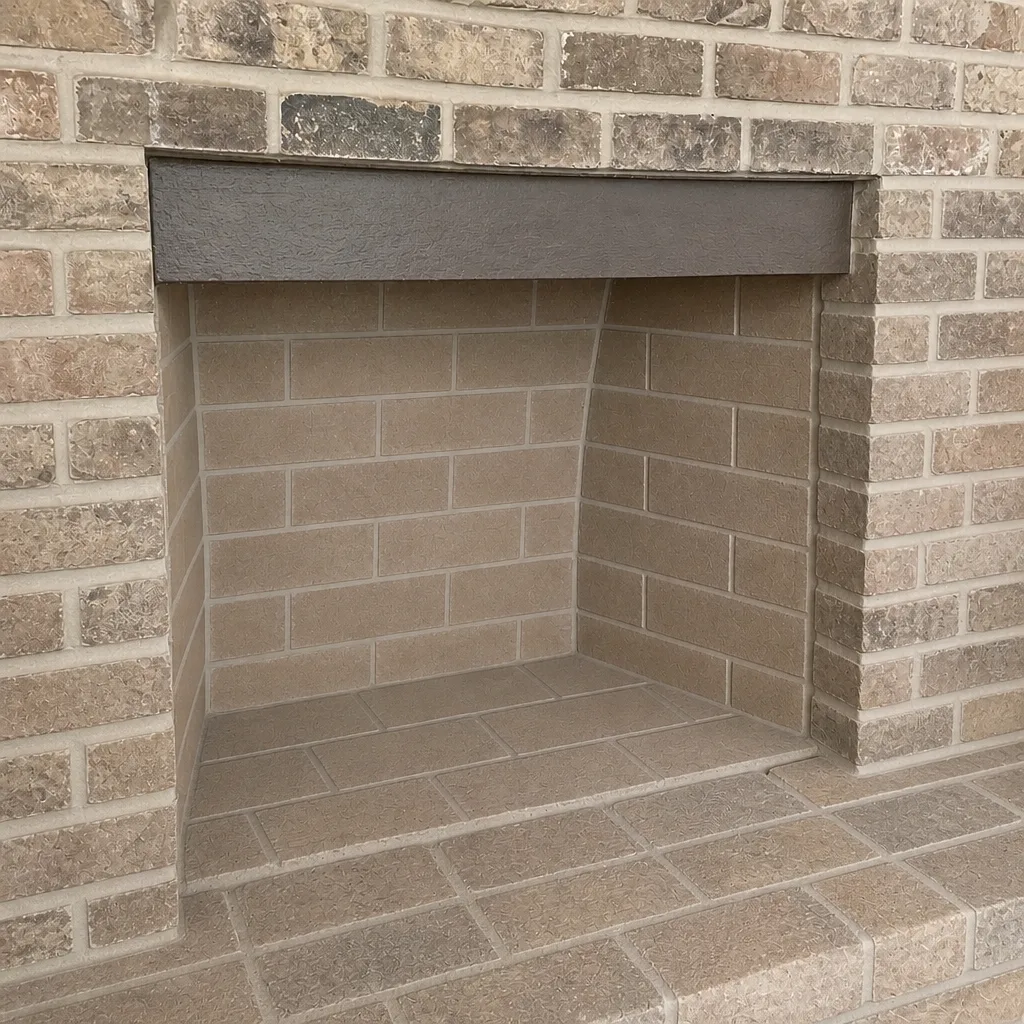 After
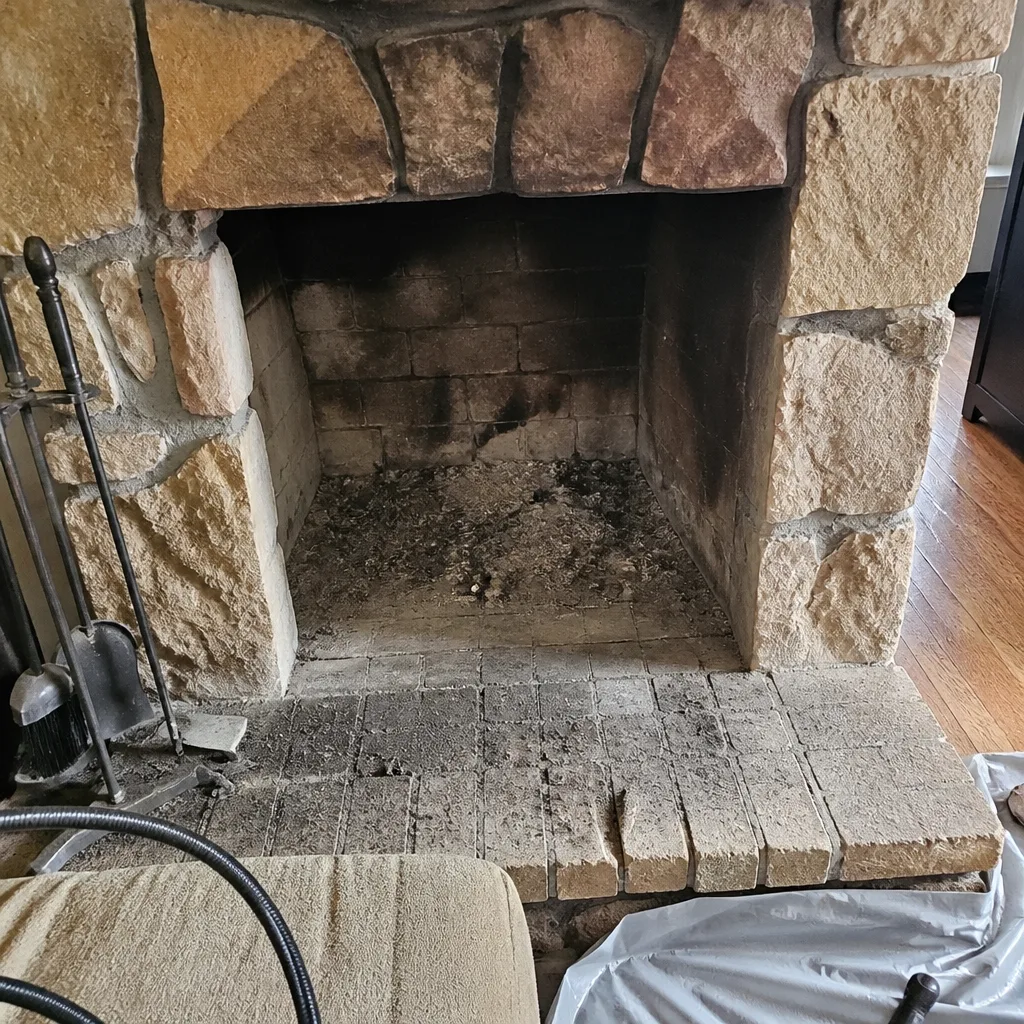 Before
 After
 Before
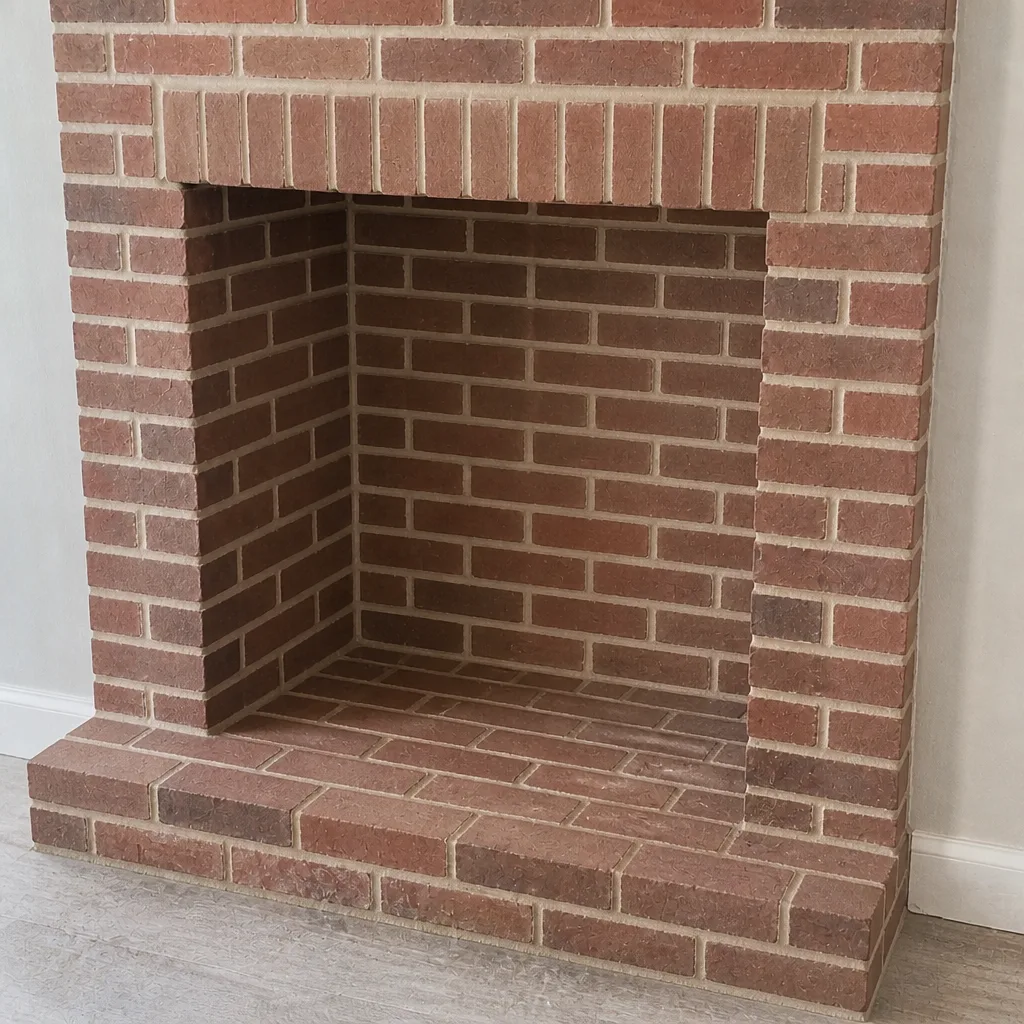 After
When to Call a Professional
Call a professional if any of these is true: your last professional inspection is more than a year old, the last inspection flagged a repair, you can’t see the flue from the damper to the top, the creosote looks glazed or tar-like, the cap or crown is damaged or missing, you’ve had a chimney fire or a near-miss, or you’re not sure. That last one is the most common. It’s also a perfectly good reason to book a visit.
There’s a second reason to call: even if you DIY the sweep, the inspection is the point, and it’s the thing a brush can’t substitute for. If the flue turns out to need a repair, a professional can match the fix to the actual condition: mechanical relining with DuraFlex where the liner is beyond saving, or HeatShield ceramic resurfacing where it isn’t. That’s a distinction a homeowner can’t make with a flashlight, and it’s the difference between a $400 repair and a $4,000 one. Having the assessment done by a trained technician, with photos you can see for yourself, is what lets you plan a repair instead of paying for the wrong one.
Chimney Sweep Riverton offers free estimates in Riverton, and a standalone inspection is an honest reason to call even if you plan to sweep your own chimney. Our technicians have up to 9 years of experience, and we document what we find from the firebox to the cap, with no commitment to repair on the same visit. We carry and install DuraFlex, HeatShield, Gelco, Olympia, Famco, and Copperfield, so the fix stays with the same team that found the problem. Call (833) 468-5704. We answer 24/7. Fast dispatch from 7am to 7pm, Sunday through Friday.
Frequently Asked Questions
It’s safe if your flue was recently inspected and cleared, the flue is a straightforward type you can reach fully, and the creosote is light. It’s not safe if any of those is unknown, which is the case for most Riverton homeowners with an older home. When in doubt, book a professional inspection before you sweep. Call (833) 468-5704 for an exact quote; estimates are free.
Typical chimney sweep costs in the Riverton area usually fall in the modest-hundreds range for a standard single-flue sweep, with the written estimate setting the final price and the inspection included in most professional visits. A DIY setup that includes a properly sized brush, rods, a shop vacuum for fine soot, a ladder, and PPE often lands close to the same figure once everything is added up. The professional visit adds the inspection and the documentation; the DIY kit doesn’t. Call (833) 468-5704 for an exact quote; estimates are free.
Yes, and it’s the single most important part of the job. A brush removes creosote, but it can’t tell you whether your flue tiles are cracked, whether the crown is letting water in, or whether the creosote above the damper is glazed. The inspection is what catches those, and it’s what produces the written record your insurer will ask for. Call (833) 468-5704 to book a standalone inspection with no commitment to repair.
The working standard for a wood-burning chimney is once a year or after a cord of wood, whichever comes first, and more often if the creosote stage was elevated at the last inspection. In Riverton, households that burn most evenings through the inversion months often sweep annually at minimum, and sometimes more if the wood isn’t well seasoned. Every chimney should be swept at the interval that matches how it’s actually used. Call (833) 468-5704 for an exact quote; estimates are free.
Skipped sweeps let creosote accumulate to stage two and stage three, and stage three is the stage that most increases chimney fire risk. Skipped inspections let flue tile cracks, crown cracks, and cap failures go unnoticed, which is the pattern that turns a small repair into a large one. Carbon monoxide risk also rises when the flue is blocked. The safe move is to sweep on schedule and inspect at least once a year. Call (833) 468-5704 for an exact quote; estimates are free.
Yes, and it usually is. A professional visit typically combines the sweep and the inspection in one appointment, with a documented report and photos delivered afterward. Booking them together is the most efficient option, and it’s the one we recommend for most Riverton homes. If you’d rather get the inspection first and decide about the sweep afterward, that works too. Call (833) 468-5704. We answer 24/7. Fast dispatch from 7am to 7pm, Sunday through Friday.
The Bottom Line
DIY chimney cleaning isn’t a bad idea on its own. It’s a bad idea when the inspection that should come with it doesn’t happen, and that’s the case for most Riverton homeowners with a chimney older than a few years. If your flue was recently inspected and cleared, the creosote is light, and the cap and crown are sound, sweeping it yourself is a fair call. If any of that is unknown, book a professional sweep and inspection as a single visit, get the documented report, and let the report tell you what comes next. That’s the decision boundary that actually matters: not “who holds the brush,” but “who documents what the brush found.” From the firebox to the cap, every component falls within our scope, and we can work with your insurer if a claim ever comes up. Call (833) 468-5704 for a free estimate. We answer 24/7, with fast dispatch from 7am to 7pm, Sunday through Friday.
Written by the team at Chimney Sweep Riverton.